English
 français
 Deutsch
 Español
 português
 العربية
Technical Whitepaper — Comprehensive Industrial Guide
Date: June 11, 2026 | Version 1.0
Abstract: Activated carbon is an exceptionally versatile porous material, essential for modern environmental protection and industrial purification. By leveraging its vast internal surface area and tailored pore structures, it serves as the invisible guardian of our water, air, and consumer products. This guide explores the fundamental science of carbon activation and its broad spectrum of applications.
While charcoal has been used for millennia, 'Activated' carbon is a high-tech material engineered through precise thermal or chemical activation processes. This activation creates an intricate network of millions of microscopic pores, resulting in a staggering internal surface area—typically ranging from 500 to 1,500 m²/g. A single gram of activated carbon can have a surface area equivalent to several football fields, all hidden within its macroscopic volume.
The functionality of activated carbon is dictated by its pore size distribution, categorized by IUPAC into three distinct tiers. Selecting the right carbon means matching the target molecule size to the right pore category:
Micropores (< 2 nm): These are the primary active sites for gas-phase adsorption and for capturing small organic molecules (e.g., VOCs, odors, and dissolved organic chemicals).
Mesopores (2 - 50 nm): Effective for larger molecules, such as dyes (Methylene Blue), color-forming compounds, and medium-sized organic contaminants in water.
Macropores (> 50 nm): While they offer little surface area for adsorption, macropores act as entry 'highways,' allowing molecules to move rapidly into the internal transport network.
Raw Material | Primary Pore Type | Target Applications |
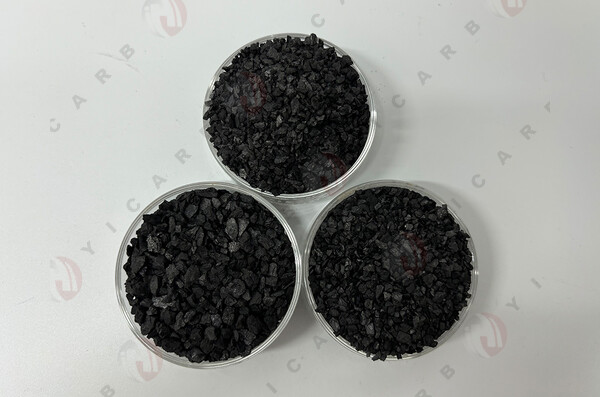
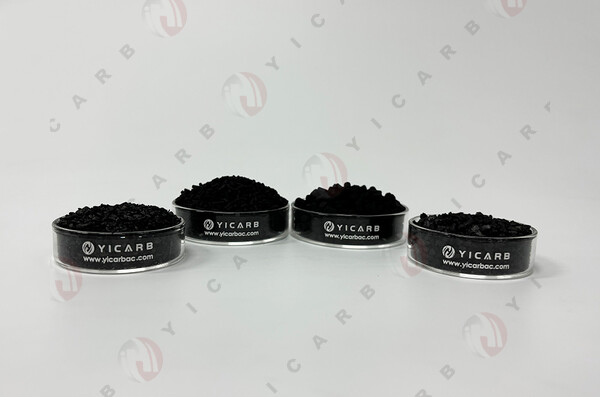
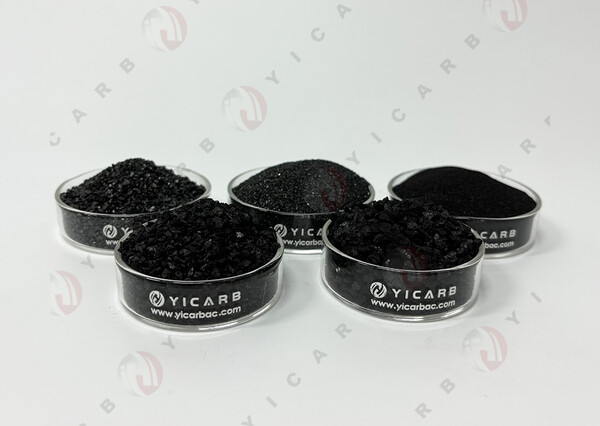
Coconut Shell | Highly Microporous | Air purification, Drinking water, VOC recovery, Catalyst carrier |
Coal-Based | Mixed (Micro + Meso) | Industrial wastewater, Large-scale municipal filters |
Wood-Based | Highly Mesoporous | Food/Sugar decolorization, Pharmaceuticals, Solvent recovery |
Activated carbon removes chlorine, chloramines, and organic contaminants that affect taste and odor. It is a critical barrier against pesticides, herbicides, and emerging contaminants such as PFAS (Per- and Polyfluoroalkyl Substances) in municipal water works and home filtration systems. For large-scale municipal and industrial installations, coal based granular activated carbon is widely selected due to its balanced micro- and mesopore structure and cost efficiency.
From industrial solvent recovery systems to kitchen range hoods, activated carbon captures Volatile Organic Compounds (VOCs) and hazardous gases like Hydrogen Sulfide (H2S). Special impregnated carbons can be used to neutralize specific acidic or alkaline vapors in chemical manufacturing. In many air-treatment designs, engineers also specify honeycomb activated carbon to achieve low pressure drop while maintaining high contact time for VOC and odor removal.
In the production of sugar, edible oils, and fruit juices, activated carbon acts as a decolorizing agent by removing large organic molecules. In medicine, it is utilized for emergency detoxification (ingested carbon) and for the purification of high-purity pharmaceutical ingredients. Where ultra-low ash and metal content are required, formulators often turn to acid washed coconut shell activated carbon to meet stringent food and pharmaceutical specifications.
To choose the right carbon, buyers must look beyond 'Activity' and analyze standardized ASTM/ISO parameters:
Iodine Value (mg/g): A fundamental indicator of micropore capacity and small molecule adsorption.
Methylene Blue (mg/g): Measures mesopore surface area and the carbon's decolorizing ability.
CTC (%): Carbon Tetrachloride Activity measures overall gas-phase activity and pore accessibility.
Expert Tip: Adsorption vs. Absorption It is vital to distinguish between ADsorption (where molecules attach to the surface) and ABsorption (where they soak into the body of the material). Activated carbon functions solely through adsorption. This is why maximizing specific surface area and maintaining clear transport pore pathways is critical for performance.
As global environmental standards tighten, the strategic value of activated carbon continues to rise. Whether it is ensuring safe drinking water, cleaning industrial emissions, or refining life-saving medicines, choosing the right high-performance carbon is an investment in safety, compliance, and sustainability.