English
 français
 Deutsch
 Español
 português
 العربية
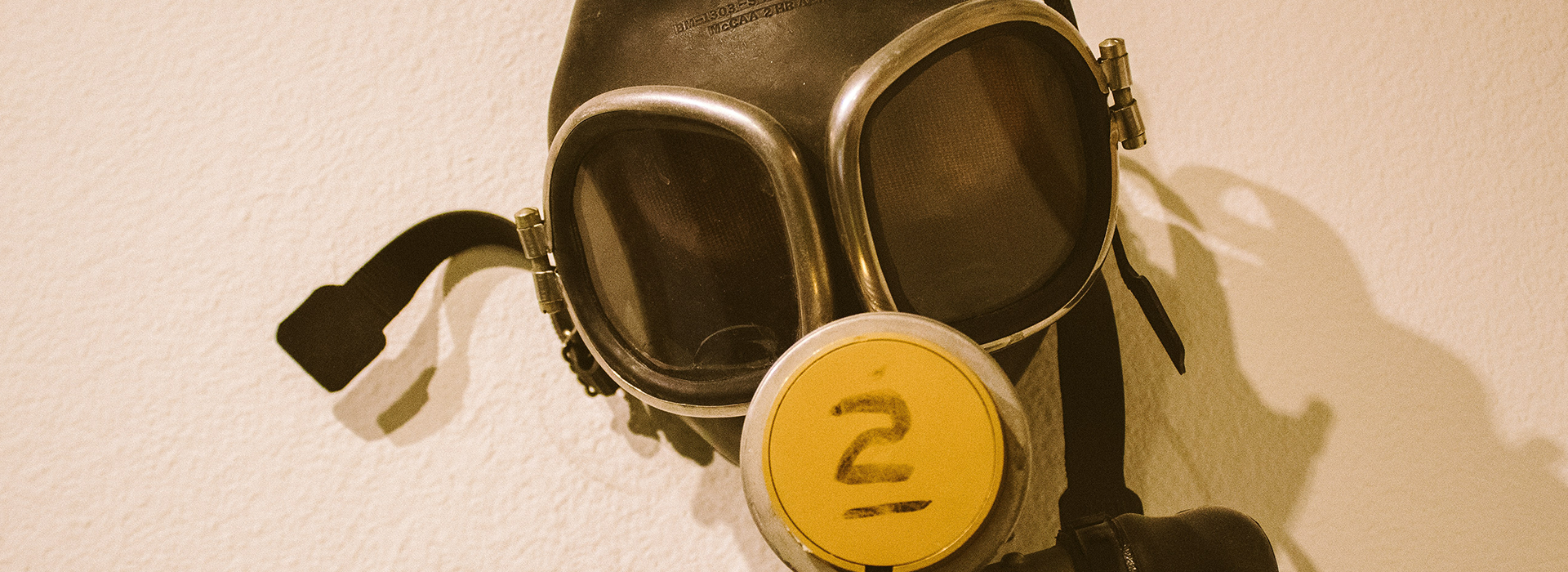
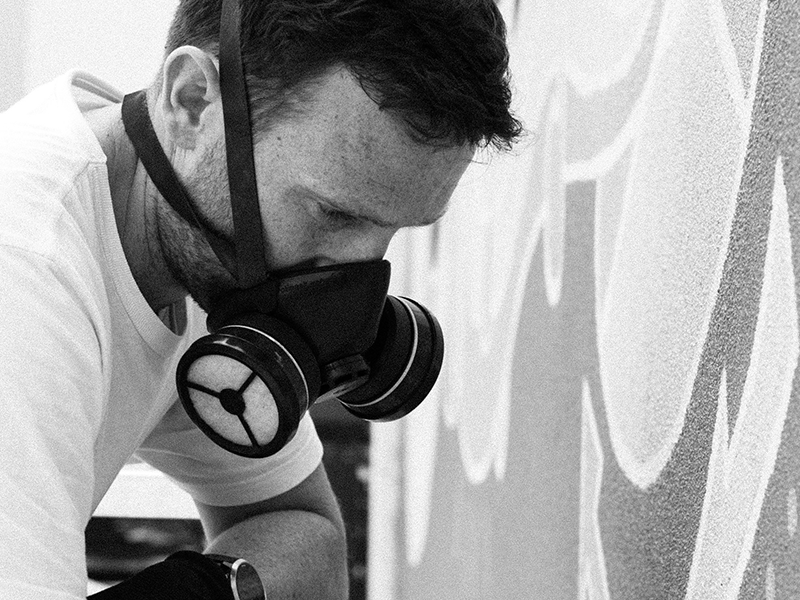
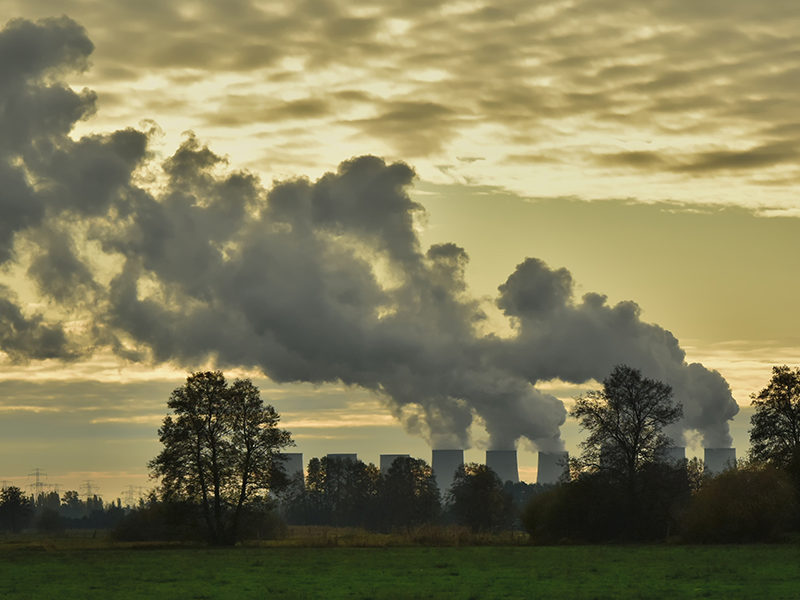
Activated carbon plays a vital role in personal protective equipment, particularly in respiratory devices such as masks, respirators, and CBRN gear, by leveraging its highly porous structure and large surface area to adsorb harmful gases, vapors, volatile organic compounds (VOCs), odors, and certain toxic airborne contaminants like NO₂, SO₂, ammonia, and chemical warfare agents. This adsorption process—often enhanced in specialized forms like impregnated charcoal—traps and removes these pollutants from inhaled air—complementing particulate filtration layers — making it essential for protection in industrial settings, polluted urban environments, military/first-responder applications, and emergency situations involving chemical, biological, radiological, or nuclear threats, thereby providing enhanced defense against a broad range of non-particulate hazards that standard filters alone cannot address.
Personal protection activated carbon is an engineered gas-phase adsorbent used inside respirator cartridges, gas mask canisters, and collective protection filters. Unlike standard activated carbon selected mainly for physical adsorption, personal protection grades are commonly produced from mechanically strong porous carbon and may be treated with carefully selected impregnants to improve the capture of specific gases that are weakly adsorbed by untreated carbon.
The activated carbon bed does not replace every component of a respirator. It primarily addresses gases and vapors, while a separate particulate filtration layer may be required when protection against dust, aerosols, or combined hazards is needed. The performance of the finished respirator depends on the complete cartridge or canister design, carbon bed depth, airflow, sealing, product certification, and actual exposure conditions.
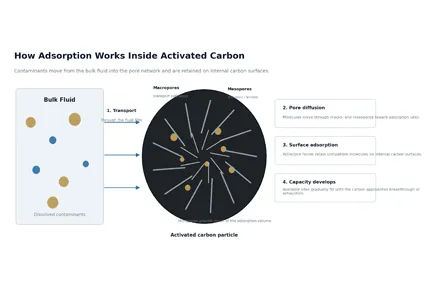
Personal protection activated carbon works through a combination of pore-based adsorption and application-specific chemical capture:
The carbon's internal pore network retains many organic vapor molecules through surface attraction. Pore structure and accessible adsorption capacity should be matched to the target contaminant and operating conditions.
Selected impregnation systems can improve the retention or reaction of gases that are not adequately controlled by untreated carbon alone. Because different contaminants require different chemistries, one carbon formulation should not be presented as universally suitable for every hazard.
During inhalation or powered airflow, contaminated air passes through a defined carbon bed. Particle size, bed depth, residence time, pressure drop, humidity, and contaminant concentration all influence breakthrough time and breathing resistance.
Personal protection activated carbon can be evaluated for replaceable cartridges and canisters used with half-mask respirators, full-face respirators, gas masks, and powered air-purifying respirators.
The selected carbon must match the contaminant class, cartridge geometry, and intended operating conditions. YICARB provides personal respirator activated carbon solutions designed for gas-phase filtration applications where adsorption performance, airflow characteristics, and filter design requirements must be considered together.
Larger activated carbon beds can be used in filtration units that supply treated air to protected rooms, vehicles, shelters, control centers, and other enclosed spaces. Collective systems require engineering around airflow, pressure drop, residence time, sealing, and replacement strategy. YICARB evaluates activated carbon for collective protection equipment according to the target contaminants, system configuration, and required operating conditions.
YICARB can evaluate impregnated activated carbon according to the contaminant category and finished-filter requirements:
Carbon pore structure and working capacity are important for solvents and other organic vapors. The appropriate carbon grade should be selected according to contaminant characteristics and expected exposure conditions.
Application-specific treatment may be required for selected inorganic gases. Different gas molecules may require different surface chemistries and impregnation approaches.
Impregnation systems can be developed for defined acidic gas challenges where untreated activated carbon may not provide sufficient adsorption performance.
Specialized formulations may be required because untreated carbon does not provide the same performance for every alkaline contaminant.
Combined-gas cartridges require carefully balanced formulations and complete system testing. References such as A, B, E, K, or ABEK describe intended filter applications and should not be used as a standalone certification claim for the raw carbon material.
Buyers should evaluate personal protection activated carbon under conditions representative of the finished filter. Important factors include:
Target gas or vapor and challenge concentration
Required protection or breakthrough time under a defined test method
Carbon particle size and particle size distribution
Apparent density and carbon bed loading
Hardness, attrition resistance, and dust generation
Moisture content and performance at the expected humidity
Pressure drop and breathing resistance contribution
Impregnant type, loading consistency, and batch uniformity
Shelf-life, packaging, and storage conditions
Compatibility with cartridge plastics, seals, and other filter layers
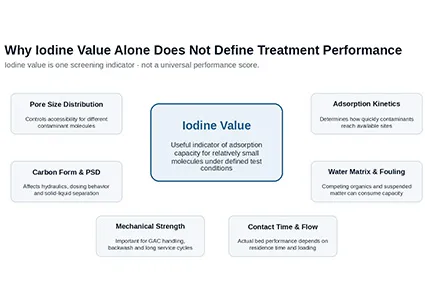
A single iodine value or surface-area figure is not sufficient to determine suitability for a personal protection application. The complete filter design, contaminant characteristics, operating environment, and validation testing must all be considered.
YICARB provides activated carbon solutions for gas-phase filtration and protective applications where adsorption performance, mechanical strength, and application-specific requirements must be evaluated.
YICARB’s impregnated activated carbon is designed for gas-phase protection applications, including industrial gas filtration equipment and protective filter systems. Its chemical impregnation supports the removal of selected hazardous gases and vapors, while the mechanically strong pelletized structure provides stable airflow and reliable packed-bed performance.
YICARB’s coal based pelletized activated carbon provides high mechanical strength, uniform particle geometry, and stable gas-flow performance.
It can serve as a base carbon for application-specific impregnation or be evaluated for selected gas-phase filter designs where particle strength, pressure drop, and packed-bed stability are important.
YICARB’s honeycomb activated carbon combines a structured honeycomb form with application-specific chemical treatment. Its low-pressure-drop configuration makes it suitable for collective air-treatment and large-air-volume purification systems targeting selected gases such as hydrogen sulfide and ammonia.
To recommend the appropriate personal protection activated carbon, please provide the following information:
Target gas or vapor, including mixed-gas composition
Challenge concentration and expected exposure profile
Applicable test standard or customer test method
Required protection or breakthrough time
Airflow, face velocity, or cartridge test flow
Temperature and relative humidity
Cartridge or canister dimensions and target carbon loading
Maximum acceptable pressure drop
Required particle size, density, and dust limits
Annual demand, packaging, and qualification schedule
YICARB can evaluate an existing grade or discuss a project-specific sample for validation in your finished filter. Final suitability must be verified in the customer's complete filter or respirator configuration under the applicable test standard.
Activated carbon performance data alone does not establish the protection capability of a complete respirator or filter. Final cartridge, canister, or collective protection system performance must be verified under the applicable test standard and intended operating conditions.
It is a gas-phase activated carbon developed for respirator cartridges, gas mask canisters and collective protection filters. It may use application-specific impregnation to improve the capture of selected hazardous gases and vapors.
Personal protection grades are selected for defined gas challenges, mechanical properties, particle size and filter performance. Many are impregnated for specific contaminants, whereas standard untreated carbon should not be assumed to provide broad gas protection.
Depending on the carbon substrate and impregnation system, it can be evaluated for selected organic vapors, acid gases, alkaline gases and other defined contaminants. The exact protection range must be confirmed by test data for the finished cartridge or canister.
Not automatically. Different contaminant classes may require different adsorption and impregnation strategies. Multi-gas filters also require balanced formulation and complete filter testing under the applicable standard.
Service life is affected by contaminant type and concentration, airflow, humidity, temperature, carbon quantity, bed depth, competing vapors and storage conditions. Replacement schedules should be established for the certified finished respirator, not estimated from carbon weight alone.
No. Activated carbon is primarily used for gases and vapors. Protection against dust, aerosols or combined hazards generally requires an appropriate particulate layer or combination cartridge as part of the complete approved respirator design.
E-mail: sales@yicarbac.com
Tel: +86-020-34760166
Mob: +86-18898406588
Whatsapp: +8618898406588
Skype:
Wechat:
Factories: Shaoguan City, Guangdong Province; Jingdezhen City, Jiangxi Province; and Hami City, Xinjiang Province
Sales Office: Room 310, Guanjiang Road, Nancun Town, Panyu District, Guangzhou, China