English
 français
 Deutsch
 Español
 português
 العربية
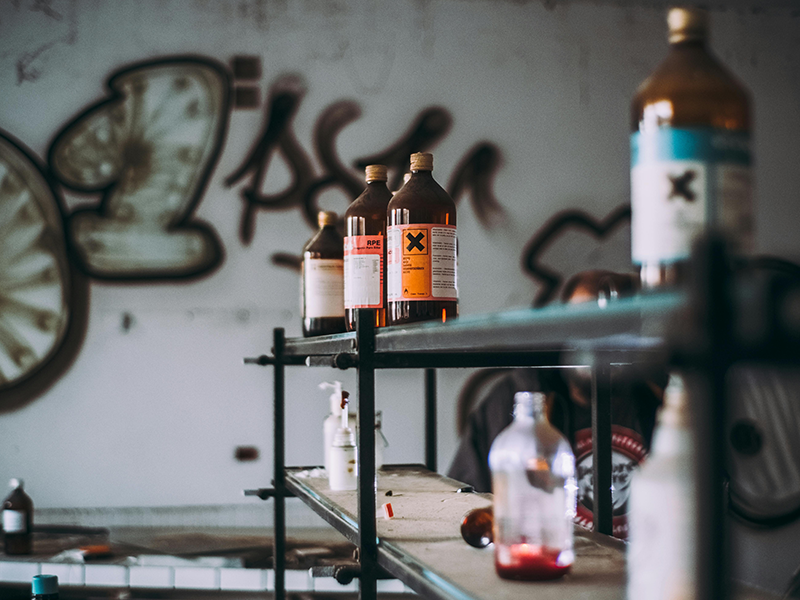


Activated carbon is widely used in the pharmaceutical field because of its outstanding adsorption performance, and the use of activated carbon in pharmaceutical processes covers multiple critical purification and treatment steps; in many cases, wood based activated carbon is selected for its favorable pore structure.
Purification and filtration: It is commonly used to purify raw materials and intermediates during drug production, removing color bodies, proteins, and other trace contaminants so that the finished products meet stringent quality requirements; this is one of the most important activated carbon uses in pharmaceutical industry workflows.
Decolorization: Activated carbon is frequently applied to decolorize pharmaceutical solutions, improving appearance while eliminating unwanted color components that may negatively impact product stability or quality, and it is often grouped with other activated charcoal meds used in formulation and cleanup stages.
Adsorption of impurities and drug molecules: During synthesis and formulation steps, activated carbon helps capture residual pharmaceutical molecules, small‑molecule heavy metals, and other impurities in solutions, enhancing the safety and effectiveness of the final drug and supporting broader activated charcoal health applications.
Polishing treatment: In the final purification stage, it serves as a polishing agent to lower chemical oxygen demand (COD) and total organic carbon (TOC), supporting compliance with regulatory and environmental standards and complementing other activated charcoal good for stomach and systemic detox solutions.
Over‑the‑counter medicinal products: Medical‑grade activated carbon is also formulated into tablets or capsules and used as a non‑prescription treatment for gastrointestinal discomfort, such as diarrhea and indigestion, by adsorbing toxins and excess gas in the digestive tract; in this context, consumers often look for activated charcoal for upset stomach as a convenient over‑the‑counter option.
The use of activated carbon in pharmaceutical manufacturing is centered on selective adsorption during purification and finishing processes. Depending on the product matrix and required quality, activated carbon may be used for:
Adsorbing selected synthesis byproducts, feedstock impurities, residual color bodies and organic contaminants from process liquids.
Removing light or dark pigments and color precursors to improve solution clarity and support downstream crystallization or filtration.
Reducing odorous compounds and selected trace impurities that may affect product quality.
Supporting purification of selected vitamins, enzymes, fermentation-derived materials and diagnostic intermediates after application-specific testing.
Helping control color, odor and unwanted organic impurities in selected raw materials or process streams.
Activated carbon is commonly added to a liquid batch, mixed under controlled conditions and removed by filtration. The carbon dose, contact time, temperature, pH and filtration method should be validated for the actual production matrix.
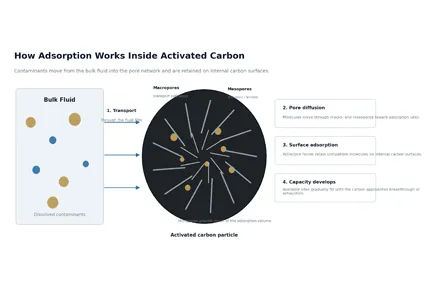
Activated carbon purifies pharmaceutical process streams by adsorbing molecules onto the internal surface of its pore network. Performance depends on the interaction between the contaminant, liquid phase and carbon surface rather than surface area alone.
Micropores contribute high adsorption area, while mesopores and macropores improve access for larger color bodies, proteins and complex organic molecules. The appropriate pore-size distribution depends on the impurity profile.
Raw material and activation method influence the carbon surface, pH and affinity for different contaminants.
Fine powder disperses rapidly in batch liquids and is commonly evaluated for decolorization, purification and impurity removal. After contact, it must be separated by suitable filtration equipment.
Granular media may be evaluated for selected continuous or fixed-bed purification duties, process water treatment or solvent-related streams where pressure drop, particle strength and bed operation are relevant.
Because activated carbon can also adsorb valuable product molecules, laboratory or pilot testing should determine the minimum effective dose and confirm product yield before scale-up.
YICARB activated carbon can be evaluated across multiple pharmaceutical and cosmetics production stages:
Active Pharmaceutical Ingredients and Intermediates. Removal of unwanted color, synthesis residues and selected organic impurities before crystallization or final polishing.
Antibiotics, Analgesics and Steroid Intermediates. Process-stream purification where carbon compatibility, yield loss and filtration behavior have been validated.
Vitamins and Nutraceutical Ingredients. Decolorization and refinement of selected vitamin, fermentation and ingredient solutions.
Enzymes and Fermentation-Derived Products. Adsorption of selected color bodies, odor compounds, cell-derived residues and process impurities, subject to product-recovery testing.
Diagnostic Agents and Specialty Chemicals. Purification of high-value intermediates where batch consistency, low extractables and traceability are important.
Cosmetics and Personal-Care Raw Materials. Purification and color or odor adjustment for selected oils, glycerine, botanical extracts and formulation ingredients.
Each application should be treated as a separate adsorption system. A grade that performs well in one API or ingredient may not provide the same selectivity in another formulation.
Low ash content and controlled soluble impurities help minimize the introduction of unwanted substances into sensitive pharmaceutical process streams.
These impurities should be carefully controlled because they may affect product purity, stability, color, or downstream processing.
The pH of the activated carbon and its water- or acid-soluble extractables can influence the treated solution. A suitable grade should remain compatible with the formulation and purification process.
Powder fineness affects adsorption speed, filter loading, processing time, carbon carryover, and the clarity of the final filtrate. The particle-size distribution should match the available mixing and filtration equipment.
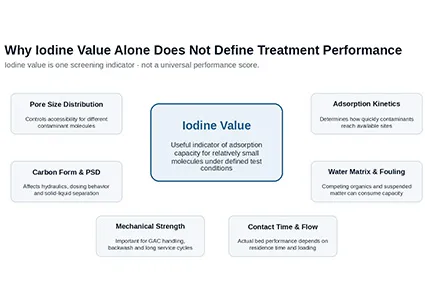
Decolorization value, methylene blue adsorption, iodine number, and other general indexes can support preliminary product comparison. However, the activated carbon should ultimately be evaluated using the actual pharmaceutical ingredient, intermediate, or process liquid.
Consistent raw materials, controlled production processes, batch identification, and Certificates of Analysis help pharmaceutical manufacturers manage supplier qualification and production traceability.
Documentation may include a Technical Data Sheet, Safety Data Sheet, Certificate of Analysis, manufacturing information, and relevant quality statements. Any pharmacopoeial or regulatory compliance claim should apply to the exact activated carbon grade being supplied.
Food-grade certification or approval for another application does not automatically demonstrate that an activated carbon grade is suitable for pharmaceutical processing, medicinal products, or direct human consumption.
Its developed pore structure, rapid adsorption, and strong liquid-phase decolorization performance make it suitable for evaluating pharmaceutical intermediates, food ingredients, fine chemicals, and other purification processes requiring efficient color and impurity removal.
YICARB provides powdered activated carbon solutions designed for applications where high adsorption capacity, efficient impurity removal, and reliable purification performance are required.
Its well-developed mesoporous structure supports the adsorption of larger color molecules and organic impurities. It can be evaluated for demanding decolorization and purification processes involving pharmaceutical ingredients, chemical intermediates, and high-color liquid streams.
For chemical purification processes, chemical activated carbon can be selected when enhanced adsorption performance and impurity removal are required for complex liquid-phase applications.
This powdered activated carbon can be evaluated for purification, decolorization, deodorization, and impurity removal in food ingredients, pharmaceutical process liquids, and related production applications. Its fine particle size supports rapid contact and efficient removal through suitable filtration equipment.
YICARB's food grade activated carbon is developed for applications requiring controlled purity, effective decolorization, and reliable processing performance in food and pharmaceutical-related industries.
Its low ash content, reduced soluble impurities, high hardness, and developed microporous structure make it suitable for evaluating selected high-purity fixed-bed purification applications where stable flow, low carbon loss, and consistent adsorption performance are important.
For high-purity purification requirements, acid washed activated carbon can provide improved cleanliness, lower impurities, and stable adsorption performance for demanding industrial processes.
The appropriate activated carbon should be selected according to the feed composition, target color or impurity, required product recovery, contact method, filtration system, process conditions, and applicable quality requirements.
Activated carbon applications in the food and pharmaceutical industries share several processing goals, including decolorization, odor control, clarification and removal of selected organic impurities. However, the feed materials, quality risks and documentation requirements are different.
Activated carbon is commonly evaluated for sweeteners, beverages, edible oils, glycerine, amino acids and other ingredients where taste, odor, color and food-contact requirements are important. Learn more about YICARB's activated carbon applications in the food industry.
Activated carbon is selected for APIs, intermediates, vitamins, enzymes, diagnostic agents and other high-purity process streams where impurity profile, product loss, filtration, traceability and compendial requirements must be assessed.
YICARB supports pharmaceutical purification processes with customized activated carbon solutions designed for different raw materials, process conditions, and quality requirements. Learn more about activated carbon for pharmaceutical and cosmetics applications. Food grade and pharmaceutical grade should not be treated as interchangeable labels. The buyer must review the specification and documentation of the exact carbon grade for the intended process.
The industrial use of activated carbon in pharmaceutical manufacturing is different from the consumer or clinical use of activated charcoal as a medical product.
Medical activated charcoal may be used by healthcare professionals in selected poisoning or overdose situations because it can reduce the absorption of certain substances in the gastrointestinal tract. It is not a universal antidote, is not effective for every substance and should not be promoted as a general remedy for stomach discomfort.
Activated charcoal can also adsorb some orally administered medicines and reduce their absorption. It should therefore not be used as a general self-treatment for stomach discomfort or together with medications without appropriate medical guidance.
Industrial activated carbon is intended for manufacturing and purification applications and should not be ingested as a consumer medical product. Any activated charcoal intended for clinical or oral use must meet the applicable product-specific quality and regulatory requirements.
Activated carbon is mainly used for decolorization, clarification, odor control and removal of selected synthesis byproducts or organic impurities from APIs, intermediates, vitamins, enzymes and other pharmaceutical process streams. The exact grade and dose must be tested with the actual material.
Powdered activated carbon is commonly mixed with a liquid batch for a controlled contact period and then removed by filtration. Granular carbon may be used in selected fixed-bed processes. Dose, contact time, pH, temperature, product loss and filterability should be validated before production use.
Activated charcoal should not be presented as a general treatment for an upset stomach. Clinical activated charcoal is used in selected poisoning or overdose cases under professional guidance. Consumers should seek advice from a healthcare professional and must not ingest industrial activated carbon.
Yes. Activated charcoal can adsorb certain orally administered medicines and reduce their absorption or therapeutic effect. Questions about timing, interactions or clinical use should be handled by a healthcare professional. This page is intended for industrial and pharmaceutical manufacturing buyers, not consumer medical advice.
The terms refer to different intended uses, specifications and documentation requirements. A food-grade certificate does not automatically prove suitability for medicinal ingestion or compliance with a pharmacopoeia. Buyers should review the Certificate of Analysis and the exact regulatory or compendial standard required for their process.
Provide the feed material, target impurity or color, pH, temperature, batch volume or flow rate, expected contact time, filtration equipment, product-recovery requirement, maximum ash or metal limits, microbiological requirements, applicable standard and required packaging. Laboratory testing is recommended before scale-up.
E-mail: sales@yicarbac.com
Tel: +86-020-34760166
Mob: +86-18898406588
Whatsapp: +8618898406588
Skype:
Wechat:
Factories: Shaoguan City, Guangdong Province; Jingdezhen City, Jiangxi Province; and Hami City, Xinjiang Province
Sales Office: Room 310, Guanjiang Road, Nancun Town, Panyu District, Guangzhou, China