English
 français
 Deutsch
 Español
 português
 العربية
Pore Diffusion and Physical Adsorption
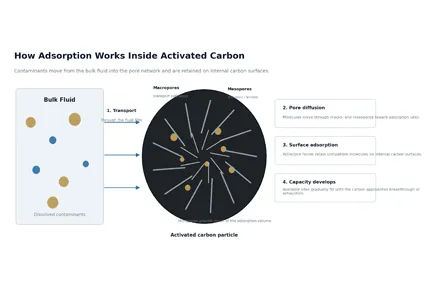
Ammonia molecules enter the carbon's pore network and are retained by physical forces. Accessible micropores and a suitable pore-size distribution help increase contact between the gas and the adsorbent.
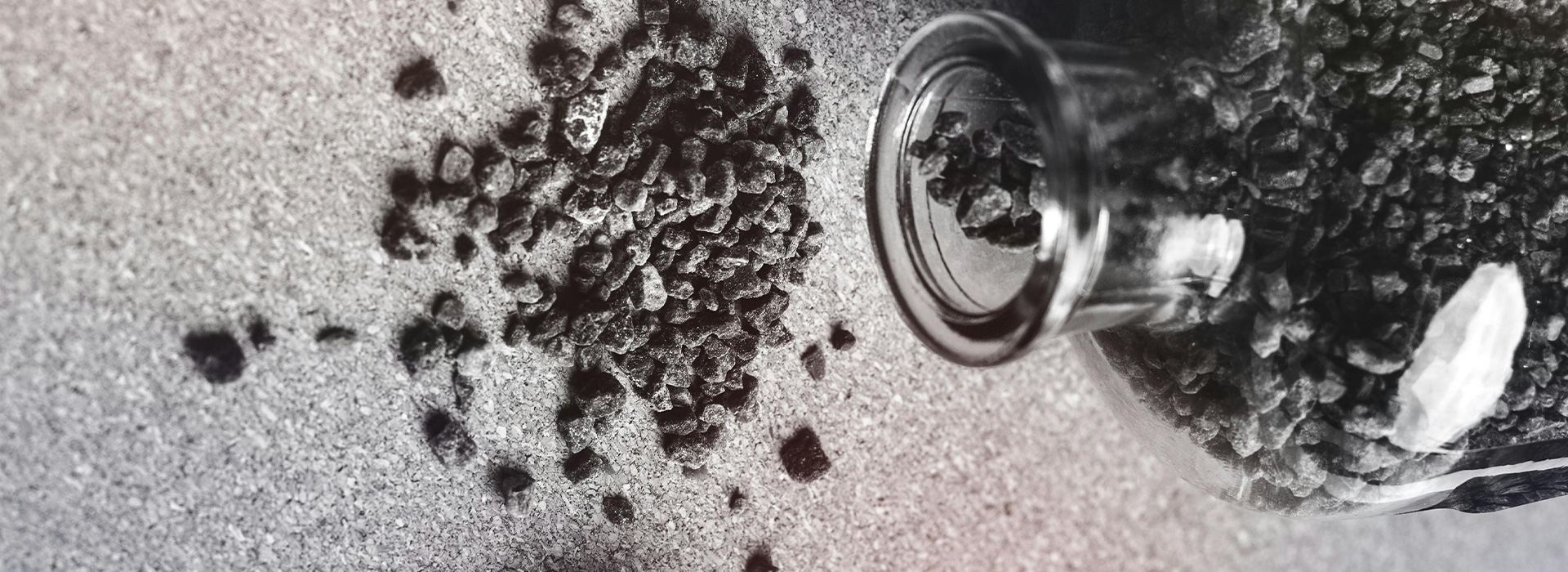
Activated carbon for ammonia removal is a gas-phase adsorbent used to capture ammonia (NH3) and related alkaline compounds from industrial air, process gas, and ventilation streams. In this context, activated carbon and activated charcoal refer to the same porous carbon material, although industrial buyers more commonly use the term activated carbon.
The adsorption of ammonia on charcoal is not determined by surface area alone. Ammonia is a small, polar, and basic molecule, so the carbon's surface acidity, functional groups, impregnation chemistry, pore accessibility, and moisture conditions all influence performance. Standard activated carbon may retain part of the ammonia through physical adsorption, while purpose-designed impregnated activated carbon provides additional reactive sites that can bind ammonia through acid-base reactions.
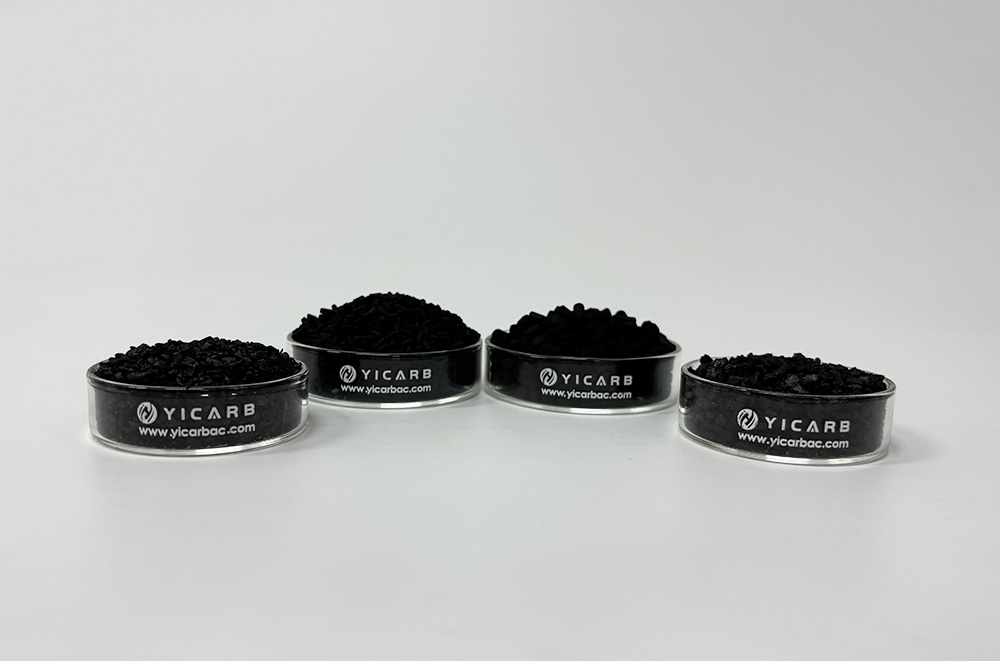
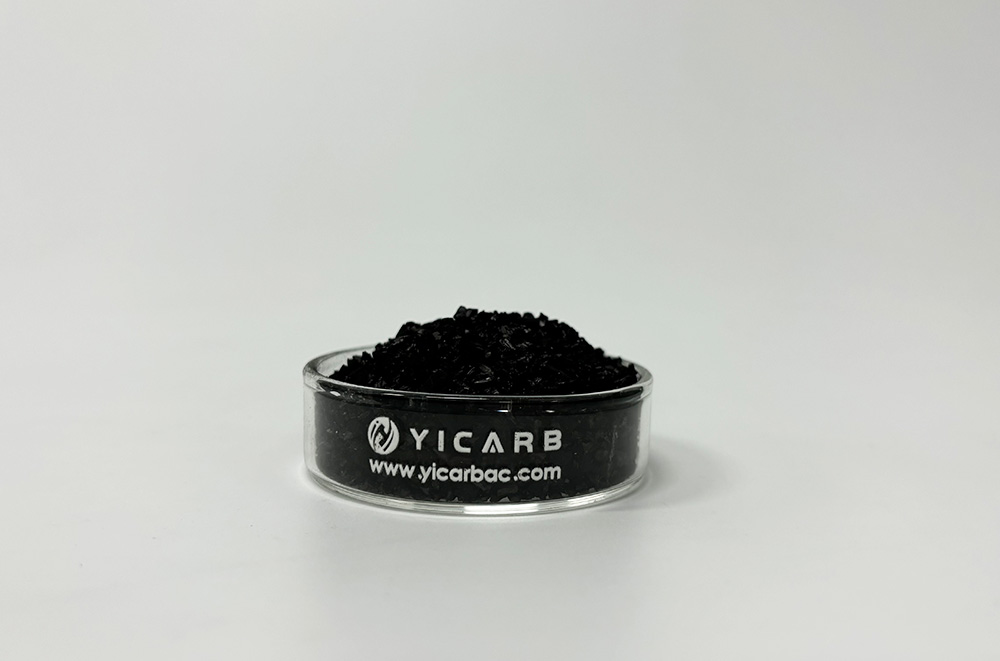
As a professional activated carbon manufacturer, YICARB can recommend pelletized, granular, or structured carbon media for fixed-bed gas purification, odor control, and catalyst-protection applications.
Yes, activated carbon can remove ammonia, but the result depends strongly on the carbon grade and operating conditions. Untreated activated carbon can provide some physical adsorption, yet its capacity for a polar, basic gas such as NH3 may be limited or inconsistent. For industrial systems requiring a controlled outlet concentration or longer breakthrough time, chemically modified or impregnated activated carbon is generally the more appropriate direction.
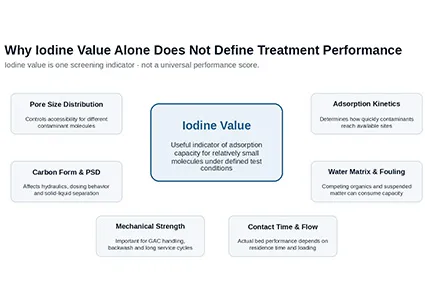
Acidic surface groups and suitable impregnants create reactive sites that interact with ammonia more strongly than an untreated carbon surface. This means that buyers should not select ammonia-removal carbon only by iodine value or BET surface area. The impregnation formula, surface pH, pore structure, particle form, humidity, temperature, residence time, and competing gases must be evaluated together.
Therefore, the practical answer to “does activated carbon remove ammonia?” is yes—but the media should be selected and, where possible, validated for the actual gas composition rather than treated as a universal carbon grade.
Activated carbon ammonia adsorption can involve several processes working together:
Ammonia molecules enter the carbon's pore network and are retained by physical forces. Accessible micropores and a suitable pore-size distribution help increase contact between the gas and the adsorbent.
Because ammonia is alkaline, acidic oxygen-containing groups or acidic impregnants on the carbon surface can react with or strongly retain NH3. This reactive mechanism is one reason impregnated carbon can outperform untreated carbon.
Humidity can either enhance or reduce ammonia-capture performance depending on the carbon substrate, impregnation chemistry, and operating conditions. Moisture may support ammonia dissolution and surface reactions, but it can also change retention strength and breakthrough behavior. Relative humidity should therefore be included in media selection and breakthrough testing.
In a fixed-bed adsorber, contaminated gas passes through a defined depth of carbon. Bed depth, gas velocity, residence time, particle size, and flow distribution determine how quickly the mass-transfer zone moves through the bed and when ammonia breakthrough occurs.
When comparing activated carbon for ammonia adsorption, industrial buyers should review more than the basic adsorption index. The following factors directly influence practical performance:
Impregnation Chemistry and Surface Acidity — The type and loading of the impregnant determine the number and strength of reactive sites available for NH3.
Pore Structure and Accessible Surface — A suitable pore network supports gas diffusion and provides space for physical adsorption and reaction products.
Carbon Form and Mechanical Strength — Pelletized carbon is suitable for packed beds, while honeycomb carbon provides a structured format for large-volume air treatment. Hardness and compressive strength affect dust generation and service stability.
Humidity and Temperature — Both variables can change adsorption capacity, reaction behavior, and breakthrough time.
Inlet Concentration and Contact Time — Higher ammonia loading, shorter residence time, or uneven flow can shorten media life.
Coexisting Gases — Amines, water vapor, acidic gases, VOCs, and other contaminants may compete for adsorption sites or alter the reaction environment.
For this reason, the final grade should be selected using the customer's actual gas data and, where required, a breakthrough test.
YICARB’s impregnated honeycomb activated carbon is designed for the treatment of ammonia and other industrial gases. Its structured honeycomb form supports stable airflow and relatively low pressure drop, making it suitable for industrial ventilation, workshop exhaust treatment, and other large-air-volume applications.
YICARB’s impregnated activated carbon provides a mechanically strong pelletized format for application-specific gas treatment. For ammonia removal, the impregnation system should be selected according to the alkaline characteristics of NH3, inlet concentration, humidity, airflow, and required outlet level. NH3-specific adsorption or breakthrough performance should be confirmed before the grade is recommended for fixed-bed ammonia treatment.
YICARB’s pelletized activated carbon features a uniform cylindrical shape, good mechanical strength, and stable packed-bed performance. It can serve as a base carbon or impregnation carrier for ammonia-removal applications when combined with an appropriate NH3-specific treatment. Untreated pelletized carbon should not be presented as the primary ammonia-removal media unless corresponding adsorption or breakthrough data are available.
The appropriate activated carbon should be selected according to the target gas composition, ammonia concentration, humidity, airflow, allowable pressure drop, bed dimensions, operating temperature, and required service life.
To recommend the correct ammonia adsorption activated carbon media, YICARB's technical team should first review the following operating information:
Gas Composition — NH3 concentration, other amines, VOCs, acidic gases, oxygen, and possible contaminants.
Airflow and Operating Conditions — Flow rate, temperature, relative humidity, pressure, and whether the system operates continuously or intermittently.
Treatment Target — Required outlet concentration, odor-control objective, emission limit, or downstream equipment-protection requirement.
Adsorber Design — Bed dimensions, available installation space, allowable pressure drop, gas velocity, and preferred pellet or honeycomb form.
Service Expectations — Required breakthrough time, replacement interval, monitoring method, and spent-carbon handling plan.
Based on these operating conditions, YICARB can recommend a suitable carbon form, impregnation direction, particle size or honeycomb specification, together with an initial testing and validation plan.
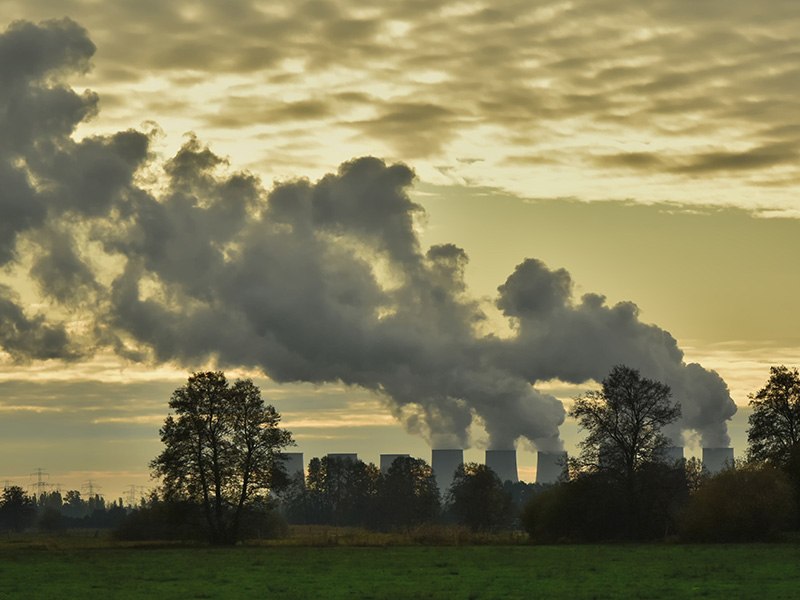
YICARB ammonia-removal activated carbon is used to treat ammonia, methylamine, dimethylamine, trimethylamine, ethylamine, and other alkaline or amine-containing gases. Typical application scenarios include:
Removes ammonia and volatile amines from process vents, storage areas, production exhaust, and gas-purification systems.
Controls ammonia emissions generated during raw-material handling, production, transfer, packaging, and ventilation processes.
Adsorbs ammonia and odor-causing alkaline compounds from covered tanks, sludge-handling areas, pump stations, and ventilation streams.
Treats low-concentration ammonia and amine vapors from reactors, drying, blending, and material-handling operations.
Supports odor control and air purification where ammonia-containing exhaust requires polishing before discharge or recirculation.
Reduces ammonia or amine contaminants before downstream equipment or sensitive process units, subject to confirmation of the gas composition and required outlet specification.
Yes. Activated carbon can remove ammonia, but chemically impregnated or surface-modified carbon is generally more suitable for controlled industrial removal than untreated carbon. Actual capacity depends on the carbon chemistry and operating conditions.
Activated charcoal and activated carbon are two names for the same adsorbent. It can capture ammonia, but an NH3-specific impregnated grade should be selected when reliable breakthrough performance is required.
Ammonia is retained through pore adsorption and, on modified carbon, acid-base reactions with acidic surface groups or impregnants. Humidity, contact time, temperature, and gas composition also affect the result.
The main factors are impregnation chemistry, surface acidity, pore structure, humidity, temperature, ammonia concentration, gas velocity, bed depth, and competing contaminants.
Impregnated pelletized carbon is suitable for packed beds, while impregnated honeycomb carbon can be considered for structured air-treatment systems. The final choice depends on airflow, pressure-drop limits, space, and required breakthrough time.
A suitably impregnated carbon may treat ammonia together with methylamine, dimethylamine, trimethylamine, ethylamine, and related alkaline gases, but mixed-gas testing or application confirmation is recommended because the compounds can compete for adsorption sites.