Guangdong Yicarb Activated Carbon Co., Ltd.

What Is Solvent Recovery Activated Carbon?

Solvent recovery activated carbon is a regenerable gas-phase adsorbent used to separate volatile organic solvent vapors from process exhaust. During adsorption, solvent molecules are concentrated within the carbon's pore network. When the bed approaches breakthrough, it is taken offline and regenerated using steam, heated inert gas, or another system-approved method. The desorbed vapor is then condensed and separated for reuse or further purification.

Unlike single-pass odor-control carbon, recovery-grade media must maintain useful working capacity across repeated adsorption and desorption cycles. Its suitability therefore depends not only on initial adsorption value, but also on solvent-specific breakthrough behavior, mechanical durability, desorption performance, and capacity retention after regeneration.

How Does an Activated Carbon Solvent Recovery System Work?

A typical solvent recovery system operates through a repeating adsorption–regeneration cycle:

01

Gas Pretreatment

Dust, aerosol, oil mist, excessive moisture, and high temperature are controlled before the gas enters the carbon bed. Pretreatment helps protect the pore structure and reduce premature breakthrough.

02

Adsorption

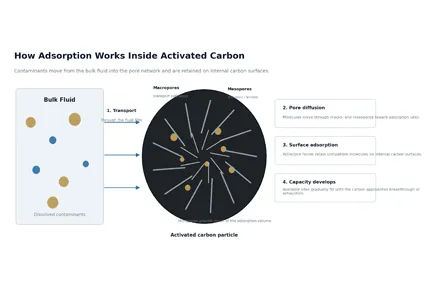
Solvent-laden air passes through a fixed bed of activated carbon. Organic vapor molecules diffuse into the pore network and are retained on the internal carbon surface.

03

Breakthrough Monitoring and Bed Switching

Once the outlet concentration reaches the system's switching limit, the saturated bed is isolated. Multi-bed systems can alternate between adsorption and regeneration to support continuous operation.

04

Desorption and Regeneration

Steam, heated inert gas, vacuum, or another approved regeneration method releases the adsorbed solvent from the carbon.

05

Condensation and Separation

The concentrated solvent vapor is cooled and condensed. Depending on water miscibility and whether the stream contains a single solvent or a mixture, decanting, distillation, or additional purification may be required before reuse.

Why Use Activated Carbon for Industrial Solvent Recovery?

YICARB solvent recovery activated carbon can support industrial recovery systems through the following characteristics:

High Organic Vapor Working Capacity — A developed pore structure provides adsorption space for VOC molecules, while the correct pore-size distribution improves solvent-specific loading and release.

Regenerable Adsorption Media — Properly selected carbon can be used through repeated adsorption and desorption cycles, reducing the need for single-use media replacement.

Stable Fixed-Bed Operation — Pelletized and high-strength granular products can provide uniform gas distribution, controlled pressure drop, and resistance to attrition in deep adsorption beds.

Solvent Reuse and Emission Control — Recovery systems concentrate dilute solvent vapors for condensation, allowing reusable solvent to be returned to production or sent for further purification.

Flexible Process Integration — Activated carbon beds can be configured for printing, coating, chemical processing, pharmaceutical production, vapor recovery, and other VOC-generating operations.

The commercial benefit depends on solvent value, concentration, gas stability, regeneration energy, separation requirements, and the ability to reuse the recovered solvent. Activated carbon should therefore be selected as part of the complete recovery process rather than as a stand-alone material.

Key Parameters for Selecting Solvent Recovery Activated Carbon

Industrial buyers should evaluate the following parameters before selecting activated carbon for solvent recovery:

Solvent-Specific Working Capacity — Breakthrough or isotherm data for the actual solvent is more useful than a general adsorption value alone.

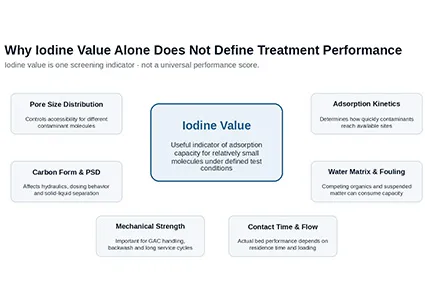
CTC Activity and Pore Distribution — CTC activity is a common gas-phase indicator, while the balance of micropores and mesopores affects adsorption and desorption for molecules of different sizes.

Particle Size and Pressure Drop — Pellet diameter or granular mesh must match the bed depth, gas velocity, and allowable blower resistance.

Hardness and Attrition Resistance — High mechanical strength helps limit dust formation and carbon loss during loading, operation, and repeated regeneration.

Moisture, Ash, and Bulk Density — These values affect usable carbon mass, bed volume, purity, and operating consistency.

Regeneration Performance — Evaluate desorption method, regeneration temperature, drying and cooling time, residual solvent, and capacity retention after multiple cycles.

Process Safety Compatibility — Solvent flammability, oxygen content, temperature rise, static control, lower explosive limit management, and inerting requirements must be reviewed by the system designer. Activated carbon is not a substitute for explosion prevention and process-safety controls.

Recommended Activated Carbon Types for Solvent Recovery

Coal Based Pelletized Activated Carbon

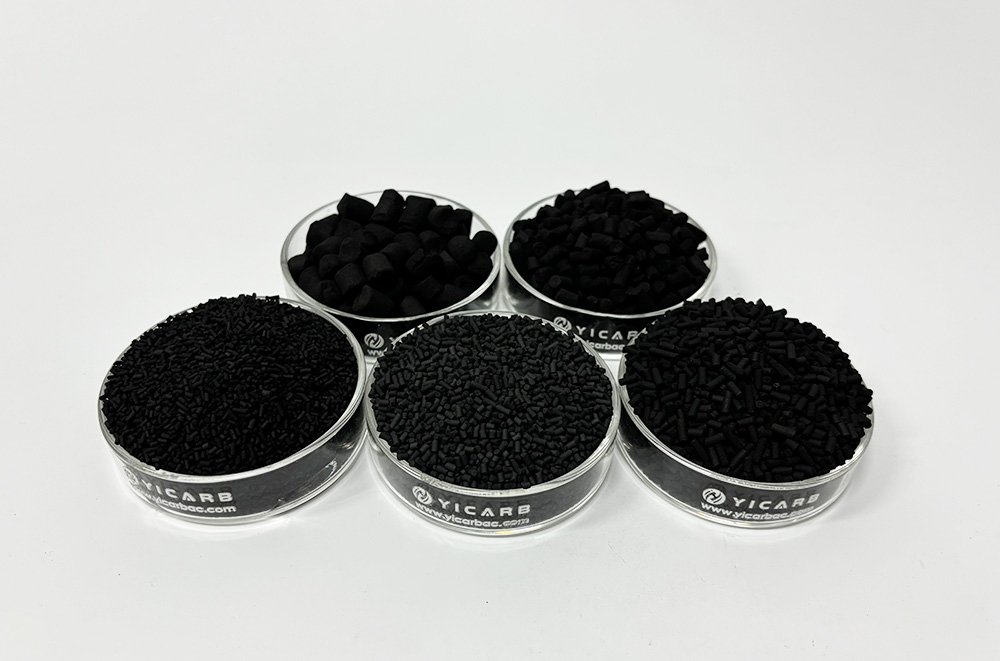
Uniform cylindrical pellets support stable gas distribution, high mechanical strength, and controlled pressure drop in deep fixed beds. This coal based pelletized activated carbon can be evaluated for industrial VOC and solvent recovery systems based on the target solvent, adsorption capacity, regeneration method, and operating conditions.

Coal Based Granular Activated Carbon

coal based granular activated carbon provides low bed resistance, high mechanical strength, and good regeneration performance. Its granular structure makes it suitable for solvent recovery systems designed around packed or fixed-bed adsorption media.

Coconut Shell Based Pelletized Activated Carbon

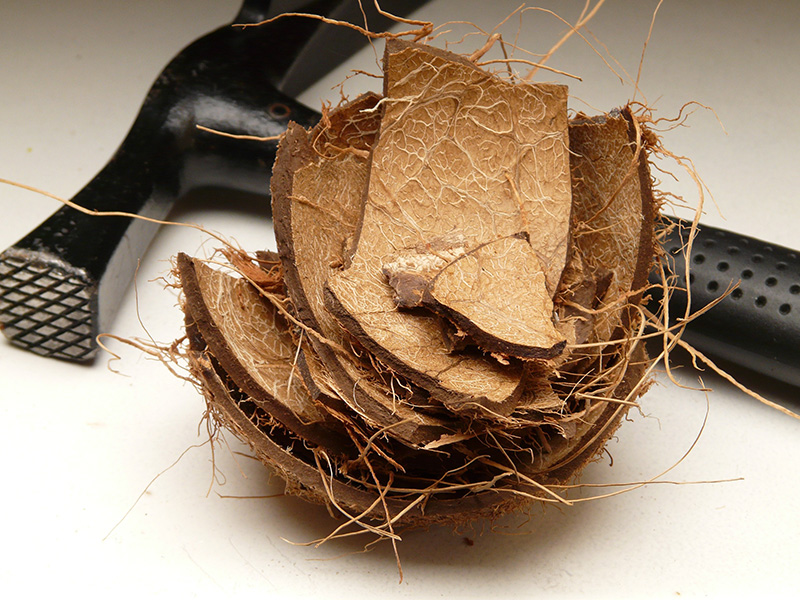
coconut shell based pelletized activated carbon combines a developed micropore structure with high hardness and stable packed-bed performance. It can be considered for selected small-molecule solvents and hydrocarbon vapors that require high adsorption capacity and repeated adsorption–desorption cycles.

Wood Based Granular Activated Carbon

wood based granular activated carbon offers developed porosity, low airflow resistance, and suitability for repeated adsorption and desorption. It can be used for selected gasoline vapors and organic solvents after evaluating the solvent’s molecular size, polarity, concentration, and regeneration conditions.

No single activated carbon grade is suitable for every solvent recovery application. Final media selection should be based on solvent composition, inlet concentration, airflow, humidity, adsorption temperature, regeneration method, pressure-drop limits, and breakthrough or pilot testing under the customer’s operating conditions.

Industrial Applications of Solvent Recovery Activated Carbon

YICARB activated carbon can be evaluated for solvent recovery in the following industrial processes:

Flexible Packaging Printing and Lamination

Activated carbon can be evaluated for recovering ethyl acetate, ethanol, isopropyl alcohol, and other solvent vapors released from gravure printing, ink drying, and lamination lines. Carbon selection and regeneration should be matched to the solvent composition and recovery process.

Coating, Adhesive, and Synthetic Leather Production

Capture of aromatic, ketone, ester, and alcohol vapors generated during coating, bonding, drying, and surface-finishing processes.

Chemical and Pharmaceutical Manufacturing

Activated carbon can be evaluated for batch-process solvents such as acetone, ethanol, isopropanol, toluene, and mixed solvent streams. The adsorption and recovery process should be selected according to solvent properties and required recovered-solvent purity. Mixed solvents may require downstream separation before reuse.

Electronics and Precision Cleaning

Adsorption of solvent vapors from cleaning and drying operations, subject to purity requirements and solvent-specific carbon testing.

Petrochemical, Storage, and Vapor Recovery

Capture of gasoline and hydrocarbon vapors from tanks, loading operations, and process vents.

Paint and Surface Treatment Lines

Recovery or concentration of solvent vapors from spray booths, curing ovens, and finishing equipment.

Application suitability depends on solvent composition, water miscibility, concentration, contaminants, regeneration method, and the required purity of the recovered solvent.

How to Select Activated Carbon for Your Solvent Recovery System

To recommend the correct solvent recovery activated carbon, YICARB's technical team should review:

Solvent names, CAS numbers, and mixture proportions

Minimum, normal, and maximum solvent concentration

Exhaust-gas flow rate, pressure, and operating schedule

Gas temperature, relative humidity, and condensation risk

Oxygen content, flammability data, and site LEL-control strategy

Dust, oil mist, resin, plasticizer, or other contaminants

Target outlet concentration and desired solvent recovery purity

Adsorber type, bed dimensions, gas velocity, and allowable pressure drop

Regeneration method, steam or inert-gas conditions, and drying/cooling cycle

Required adsorption–desorption cycles and carbon replacement criteria

With this information, YICARB can shortlist suitable carbon forms and specifications and recommend laboratory, isotherm, or pilot breakthrough testing before full-scale use.

Advantages of YICARB Carbon for Solvent Recovery

Advantages of YICARB Carbon for Solvent Recovery

YICARB activated carbon products offer the optimal:


  • Pore size distribution and pore volume, for adsorption and regeneration

  • Hardness and Durability

  • Particle Diameter and Pressure Drop

  • Optimum pH Levels

  • High Purity

FAQs About Solvent Recovery Activated Carbon

  • What is solvent recovery activated carbon?

    It is a regenerable gas-phase adsorbent used to capture organic solvent vapors from industrial exhaust. After adsorption, the solvent is desorbed, condensed, and reused or further purified.

  • How does activated carbon recover organic solvents?

    Solvent molecules are adsorbed inside the carbon pore network. When the bed approaches breakthrough, it is regenerated with steam, heated inert gas, vacuum, or another approved method, and the released vapor is condensed.

  • Which activated carbon is best for solvent recovery?

    Pelletized or high-strength granular activated carbon is commonly evaluated for fixed-bed recovery systems. The best grade depends on solvent type, concentration, humidity, pressure drop, and regeneration method.

  • Can solvent recovery activated carbon be regenerated and reused?

    Yes, suitable grades are designed for repeated adsorption and desorption. Actual cycle life depends on fouling, solvent composition, regeneration conditions, attrition, and the amount of capacity retained after each cycle.

  • Which solvents can be recovered with activated carbon?

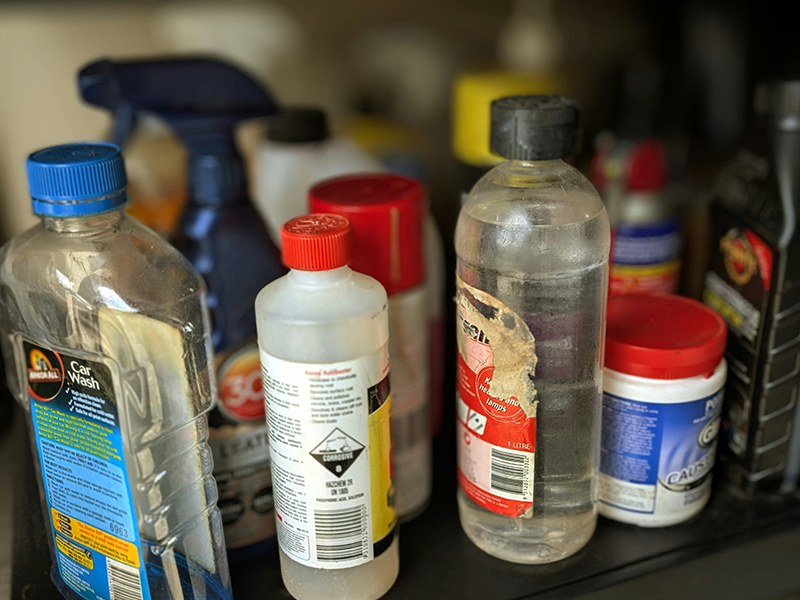
    Activated carbon can be evaluated for aromatic hydrocarbons, esters, ketones, alcohols, and gasoline vapors. Water-soluble or mixed solvents may require additional condensation, phase separation, or distillation.

  • What information is needed to recommend a solvent recovery carbon grade?

    Provide the solvent composition, concentration range, airflow, temperature, humidity, contaminants, bed design, pressure-drop limit, regeneration method, outlet target, and required recovered-solvent purity.