English
 français
 Deutsch
 Español
 português
 العربية
How adsorption, carbon form, and operating conditions influence contaminant removal and treatment performance
Date | August 27, 2026 |
Author | YICARB Technical Expert (15+ years experience in activated carbon industry) |
Activated carbon for wastewater treatment is widely used when dissolved organic compounds, color, odor, trace contaminants, or variable residual loads remain after conventional treatment. These wastewater treatment applications rely on activated carbon adsorption rather than simple mechanical filtration: contaminants move from the liquid phase into an accessible pore network and are retained on internal carbon surfaces. The effectiveness of contaminant removal depends on far more than a single specification. Pore-size distribution, surface chemistry, carbon form, particle size, contact time, water chemistry, competing substances, hydraulic conditions, and pre-treatment quality all influence practical performance. This technical brief explains where activated carbon fits in a wastewater treatment train, the principal applications and benefits, and the factors industrial buyers should evaluate when selecting a carbon solution.
Wastewater treatment is rarely a single-step process. Physical separation can remove suspended solids, biological treatment can reduce biodegradable organic load, and chemical treatment can address specific compounds or adjust water chemistry. Even after these stages, however, the treated stream may still contain dissolved organics, color bodies, odor-causing substances, trace contaminants, or compounds that are difficult to biodegrade.
This is where activated carbon can provide value. Rather than replacing upstream treatment, it is often used as an adsorption step that targets the remaining dissolved fraction. Depending on the process, it may be applied as a polishing stage before discharge, as part of a reuse system, as protection for downstream membranes or other sensitive equipment, or as a flexible treatment option during variable contaminant loading.
The most important point is that activated carbon for wastewater treatment should be selected around the treatment objective. A carbon that performs well for one contaminant mixture may not be the best option for another because adsorption depends on both the contaminant and the accessible internal structure of the carbon.
Activated carbon adsorption is a surface phenomenon. Contaminant molecules first move from the bulk water toward the carbon particle, cross the liquid boundary layer, enter larger transport pores, diffuse deeper through the pore network, and interact with internal carbon surfaces. If the interaction is favorable, the molecules are retained until the carbon approaches exhaustion or operating conditions change.
The pore network is commonly discussed in terms of macropores, mesopores, and micropores. Larger pores mainly support transport into the particle, mesopores improve access for larger molecules, and micropores provide a substantial portion of the adsorption volume for smaller molecules. The useful pore structure therefore depends on the molecular size and chemistry of the contaminants that need to be removed.
Surface chemistry matters as well. Polarity, charge, solubility, functional groups, pH, temperature, and the presence of competing substances can influence adsorption affinity. For that reason, contaminant removal cannot be predicted reliably by surface area or iodine value alone.
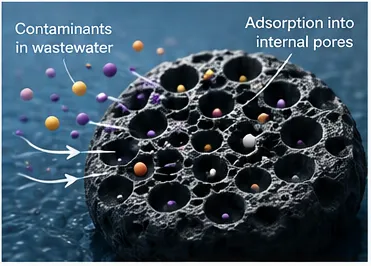
Figure 1: Activated carbon adsorption and pore structure.
The role of activated carbon differs according to wastewater composition and process design. Common wastewater treatment applications include the following:
• Advanced polishing after biological treatment: Residual dissolved organics may remain after biological treatment even when most biodegradable load has been removed. Activated carbon can provide an additional adsorption barrier before discharge or reuse.
• Color and odor control: Color-causing organic molecules and odor-producing compounds can persist through conventional treatment. Suitable carbon can reduce these compounds when their molecular characteristics match the available pore structure and surface chemistry.
• Removal of difficult-to-biodegrade organics: Certain industrial organic compounds are poorly biodegradable or may inhibit biological systems. Activated carbon can be used as a complementary treatment step when adsorption is appropriate for the target compounds.
• Trace contaminant control: In advanced treatment systems, activated carbon may be used to reduce low-concentration organic contaminants that remain after primary, biological, or membrane processes.
• Process water reuse and final polishing: Where treated wastewater is intended for reuse, activated carbon can help lower residual organic loading, improve odor and color, and provide additional protection for downstream treatment steps.
Granular activated carbon is commonly used in fixed beds, pressure vessels, gravity filters, and polishing columns. Wastewater passes through a carbon bed, allowing contaminants to transfer into the particles over time. As adsorption sites become occupied, a mass-transfer zone progresses through the bed. Breakthrough monitoring helps determine when the carbon should be replaced or regenerated.
Granular activated carbon for wastewater treatment is particularly suitable when continuous operation, controlled contact time, low carryover of carbon solids, and the possibility of regeneration are important. Bed depth, empty-bed contact time, flow distribution, pressure drop, influent solids, and backwashing requirements all influence system performance.
Powdered activated carbon is normally dosed directly into a liquid process and later removed with sludge, clarification, filtration, or another solids-separation step. Its small particle size provides short diffusion paths and operational flexibility, making PAC useful when contaminant loads fluctuate, treatment is intermittent, or temporary adsorption support is required.
PAC is not automatically superior because of its smaller particle size. Dose, mixing, contact time, separation efficiency, sludge handling, and the economics of one-time use must be considered. The choice between GAC and PAC is therefore a process decision rather than a simple product comparison.
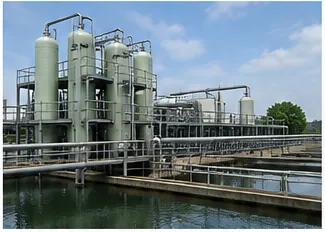
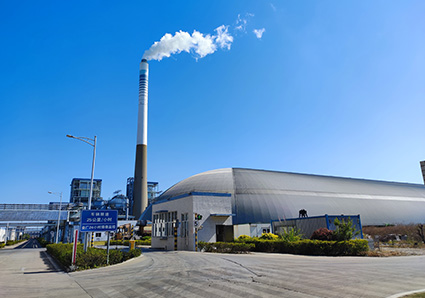
Figure 2: GAC treatment in industrial wastewater systems.
• Broad adsorption capability: A properly selected carbon can adsorb a wide range of dissolved organic compounds. The breadth of useful adsorption depends on pore structure, surface chemistry, contaminant concentration, and competing substances.
• Improved final effluent quality: Activated carbon can reduce residual organics, color, odor, and selected trace contaminants after upstream treatment, supporting more consistent polishing performance.
• Flexible integration: GAC and PAC can be integrated into different treatment configurations, allowing activated carbon to be used in continuous beds, batch dosing, polishing systems, or temporary process support.
• Protection of downstream processes: Reducing residual organic loading can help protect membranes, ion-exchange systems, or other downstream equipment from additional organic burden, depending on the overall treatment train.
• Potential for regeneration: In suitable GAC applications, spent carbon may be thermally regenerated rather than treated strictly as a single-use material. Whether regeneration is practical depends on carbon type, contamination, logistics, and economic conditions.
Successful contaminant removal depends on the interaction between the carbon, the wastewater matrix, and the treatment system. Several factors should be evaluated together:
• Contaminant chemistry: Molecular size, polarity, solubility, charge, concentration, and chemical form affect adsorption affinity and pore accessibility.
• Pore-size distribution: The carbon must provide transport pathways and adsorption pores that are accessible to the target molecules.
• Contact time and hydraulic loading: Insufficient residence time can limit mass transfer even when the carbon has suitable adsorption capacity.
• Competing substances: Natural organic matter, oils, surfactants, and other dissolved compounds may occupy adsorption sites or restrict pore access.
• pH and temperature: These variables can change contaminant speciation, carbon surface interactions, adsorption equilibrium, and mass-transfer behavior.
• Suspended solids and pre-treatment: High solids loading can foul the carbon surface, increase pressure drop in GAC beds, and reduce the fraction of the pore structure available for adsorption.
• Carbon particle size: Smaller particles shorten diffusion paths but may increase pressure drop or separation requirements. Particle size should match the selected process configuration.
Activated carbon products are commonly compared using iodine value, BET surface area, ash, moisture, particle size, hardness, or other quality-control indicators. These parameters are useful, but each describes only part of the product. Iodine value, for example, is often associated with adsorption of relatively small molecules and developed microporosity; it does not independently describe how a carbon will perform against a complex wastewater mixture containing contaminants of different molecular sizes and chemistries.
For activated carbon for wastewater treatment, specification data should therefore be interpreted in the context of the application. Industrial buyers should consider the target contaminants, carbon form, pore structure, particle size distribution, hydraulic requirements, expected carbon consumption, mechanical behavior where relevant, and replacement or regeneration strategy. For difficult or high-value applications, laboratory adsorption testing or pilot evaluation can provide more useful evidence than specification-sheet comparison alone.
Application Example - not a customer case study: Consider an industrial facility where conventional physical and biological treatment removes suspended solids and most biodegradable organic load, but the final effluent still contains dissolved organic compounds, residual color, and odor. The objective is not to replace the existing treatment system, but to add a polishing step that improves final effluent consistency.
A technically sound evaluation would begin with the remaining contaminant profile. If the flow is continuous and the residual organics are suitable for adsorption, a GAC fixed bed may provide controlled contact and straightforward breakthrough monitoring. If the contaminant load is highly variable or temporary, PAC dosing may provide greater operational flexibility. In either case, the carbon should be evaluated together with contact time, influent chemistry, competing organics, solids loading, and the practical method for replacing, regenerating, or separating the carbon.
This example illustrates why wastewater treatment applications should be approached as process problems rather than product-selection exercises. Activated carbon can be highly effective, but the result depends on matching the adsorption characteristics of the carbon with the actual wastewater matrix and operating conditions.
A useful procurement process should combine product specifications with application evidence. Buyers can request a batch-specific Certificate of Analysis and review parameters relevant to the selected carbon type, such as iodine value, particle size distribution, ash, moisture, and mechanical strength. However, the significance of each parameter should be tied to the intended treatment process.
For new wastewater streams, a staged evaluation is often more reliable: characterize the influent, define the contaminant removal objective, identify the appropriate carbon form, shortlist products based on pore structure and quality-control data, perform bench-scale adsorption testing where practical, and confirm hydraulic or operational behavior before full-scale use. This approach reduces the risk of choosing carbon on the basis of one headline specification.
YICARB approaches activated carbon selection by connecting material properties with the treatment objective. For industrial water and wastewater applications, this means considering the contaminant profile, pore accessibility, carbon form, particle size, mechanical behavior, operating conditions, and the way the carbon will be handled in the customer’s process.
Consistent manufacturing and quality control are important because adsorption systems depend on predictable carbon behavior from batch to batch. A technically appropriate product should not only meet relevant quality parameters; it should also fit the customer’s treatment configuration and provide a practical route for monitoring, replacement, regeneration, or disposal.
Activated carbon for wastewater treatment provides a flexible adsorption-based method for reducing residual dissolved organics, color, odor, and selected trace contaminants across a range of wastewater treatment applications. Effective contaminant removal is controlled by the complete system - including contaminant chemistry, pore accessibility, contact time, competing substances, pH, temperature, pre-treatment quality, and hydraulic conditions. The practical value of activated carbon adsorption is therefore not defined by the highest iodine value or surface area alone; it comes from matching the carbon to the wastewater and the treatment objective. When activated carbon for wastewater treatment is selected using that application-based approach, it can provide a reliable polishing step and a technically sound option for improving effluent quality in industrial treatment systems.
This is the first one.