English
 français
 Deutsch
 Español
 português
 العربية
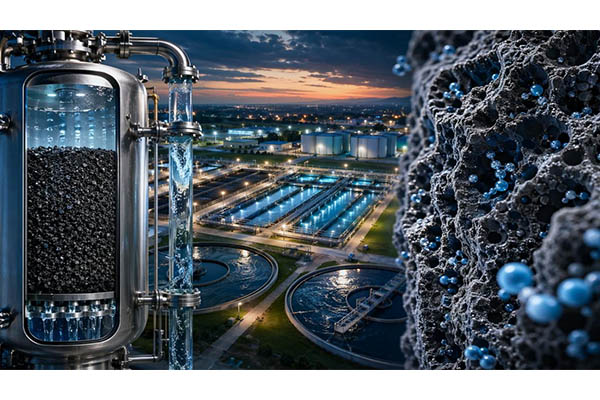
Figure 1: GAC filter bed cross-section (left), microporous adsorption surface at nanoscale (right), and modern water treatment plant aerial view (center). Activated carbon sits at the heart of advanced water purification infrastructure worldwide.
Activated carbon — in its granular (GAC), powdered (PAC), and biological (BAC) forms — has become the indispensable core technology in modern municipal drinking water treatment. As source water quality faces increasing pressure from agricultural runoff, pharmaceutical residues, disinfection by-product (DBP) formation, and emerging contaminants such as PFAS, activated carbon provides a uniquely versatile and cost-effective barrier. This article examines the engineering science underpinning activated carbon's performance in water treatment, reviews the critical product parameters that determine real-world outcomes, and presents two validated case studies — from Singapore's advanced water infrastructure and a major German Rhine-valley utility — that quantify the operational and public health benefits of high-performance activated carbon in full-scale treatment trains.
Conventional municipal water treatment — coagulation, flocculation, sedimentation, and rapid sand filtration — was designed to remove suspended solids, turbidity, and pathogenic microorganisms. It was not designed for the chemical landscape of the 21st century.
Today's surface water and groundwater sources carry a complex chemical burden that conventional processes cannot address:
Disinfection by-products (DBPs): Chlorination of water containing natural organic matter (NOM) produces trihalomethanes (THMs), haloacetic acids (HAAs), and other carcinogenic compounds. WHO and EU regulations set strict limits (THMs: 100 μg/L; HAAs: 60 μg/L).
Taste and odor compounds: Geosmin and 2-methylisoborneol (2-MIB) — produced by cyanobacteria and actinomycetes in source water — cause musty, earthy flavors detectable at concentrations as low as 4–6 ng/L, driving consumer complaints even when water meets all safety parameters.
Pesticides and herbicides: Agricultural runoff introduces atrazine, simazine, chlorpyrifos, and glyphosate into surface water catchments. EU drinking water standards set a 0.1 μg/L limit per individual pesticide.
Pharmaceuticals and endocrine-disrupting compounds (EDCs): Antibiotics, synthetic estrogens, analgesics, and X-ray contrast agents pass through conventional treatment and conventional wastewater plants largely intact, accumulating in source water bodies.
PFAS (per- and polyfluoroalkyl substances): These highly persistent synthetic compounds resist conventional treatment. Emerging regulations (US EPA: 4 ng/L for PFOA/PFOS) demand advanced treatment solutions.
Activated carbon, with its extraordinary surface area and tunable chemistry, addresses all five categories within a single unit process — making it the most cost-effective tool available to water utilities facing multi-contaminant compliance challenges.
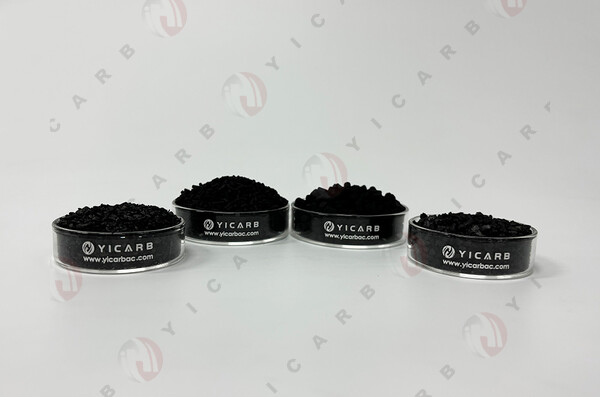
Three primary forms of activated carbon are deployed in drinking water treatment, each optimized for different operational contexts:
Table 1: Comparison of GAC, PAC, and BAC for Drinking Water Applications
Property | GAC (Granular) | PAC (Powdered) | BAC (Biological) |
Particle Size | 0.5–4.0 mm | < 0.074 mm (200 mesh) | 0.5–4.0 mm |
BET Surface Area | 700–1,300 m²/g | 800–1,800 m²/g | 700–1,200 m²/g |
Iodine Number | 800–1,100 mg/g | 900–1,200 mg/g | 800–1,050 mg/g |
Contact Time Required | 5–30 min (EBCT) | 10–20 min contact | 10–30 min (EBCT) |
Regeneration | Thermal (reusable) | Single-use (disposal) | Periodic backwash |
Primary Removal Target | Organics, taste, odor, Cl₂ | Emergency/seasonal use | DOC, AOC, micropollutants |
Biological Activity | Minimal | None | Active biofilm supported |
Typical Application | Continuous filtration | Shock dosing | Advanced tertiary treatment |
Operating Cost (relative) | Low (long life) | High (single-use) | Low–Medium |
Table 1: Comparative overview of granular, powdered, and biological activated carbon for municipal water treatment.
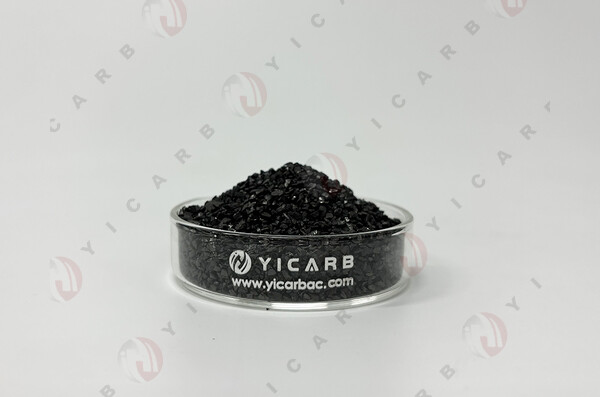
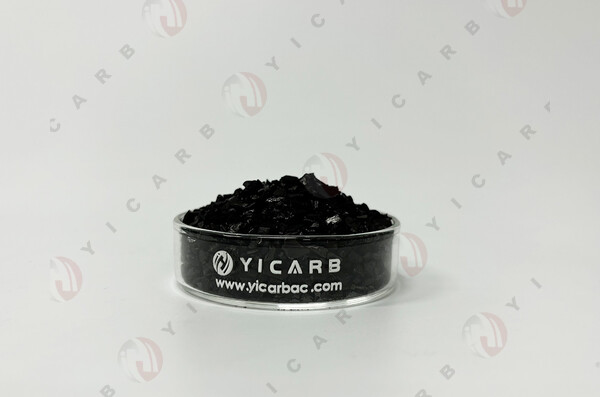
GAC contactors operate as fixed-bed adsorbers through which pre-treated water passes at a controlled flow rate. The key design parameter is the Empty Bed Contact Time (EBCT), typically 10–30 minutes for drinking water applications. GAC is the workhorse of advanced water treatment: it can be regenerated thermally (at 800–900 °C) and reused for multiple cycles, making it economically superior to PAC for continuous operation.
Raw material matters critically: Coconut shell GAC, with its predominantly microporous structure and Iodine Number of 1,000–1,200 mg/g, outperforms coal-based GAC for small-molecule contaminants including taste/odor compounds, THMs, and pesticides. Coal-based GAC, with its broader pore size distribution, may offer advantages for larger NOM molecules but at the cost of lower micropore efficiency for trace-level pollutants.
PAC is dosed directly into raw water or at the coagulation stage, then removed with the sludge. Its primary value is flexibility: it can be rapidly deployed during algal bloom events, emergency contamination incidents, or seasonal taste-and-odor episodes without permanent infrastructure changes. However, as a single-use reagent, its long-term operating cost is significantly higher than GAC, and its fine particle size raises handling and disposal challenges.
BAC combines adsorption with biological degradation: a biofilm of heterotrophic bacteria establishes on the carbon surface, biodegrading dissolved organic carbon (DOC) and assimilable organic carbon (AOC) that would otherwise pass through a purely physical adsorption process. BAC is typically deployed after ozonation (O₃/BAC process), which oxidizes recalcitrant NOM into more bioavailable fragments, maximizing biological removal efficiency. BAC systems achieve superior DOC removal, reduce DBP formation potential, and extend the effective adsorption life of the carbon bed.
Table 2: Activated Carbon Removal Performance by Contaminant Class
Contaminant Class | Key Parameters Removed | Typical Removal Efficiency |
Disinfection By-Products (DBPs) | Trihalomethanes (THMs), HAAs, chloroform | 85–99% |
Taste & Odor Compounds | Geosmin, 2-MIB, H₂S, chlorine | 90–99% |
Pesticides & Herbicides | Atrazine, simazine, chlorpyrifos | 70–95% |
Pharmaceuticals & EDCs | Estrogens, antibiotics, analgesics | 40–85% (GAC); >85% (BAC) |
PFAS (Per/Polyfluoroalkyl Substances) | PFOA, PFOS, short-chain PFAS | 70–99% (depends on EBCT) |
Heavy Metals (with surface chemistry) | Arsenic(V), mercury, lead | 40–80% (modified GAC) |
Dissolved Organic Carbon (DOC) | Humic acids, fulvic acids, NOM | 30–60% (GAC); 50–70% (BAC) |
Residual Chlorine & Chloramines | Free Cl₂, combined Cl₂ | > 99% |
Table 2: Typical removal efficiencies of activated carbon (GAC/BAC) for key drinking water contaminants under optimized EBCT conditions.
Adsorption performance is governed by the Freundlich isotherm model: log(q) = log(Kf) + (1/n)·log(Ce), where q is the mass of contaminant adsorbed per unit carbon mass, Ce is the equilibrium concentration, and Kf and 1/n are empirical constants specific to each contaminant-carbon pair. High-micropore-volume coconut shell carbon consistently achieves higher Kf values for low-molecular-weight contaminants, translating directly into longer bed life between regeneration cycles.
PFAS removal deserves special attention: short-chain PFAS compounds (C4–C6) have lower hydrophobicity and smaller molecular size, making them more difficult to remove than long-chain PFAS. Extended EBCT (15–30 minutes), high-surface-area GAC, and regular regeneration are critical design parameters for PFAS-compliant systems, particularly when using granular activated carbon for PFAS removal.
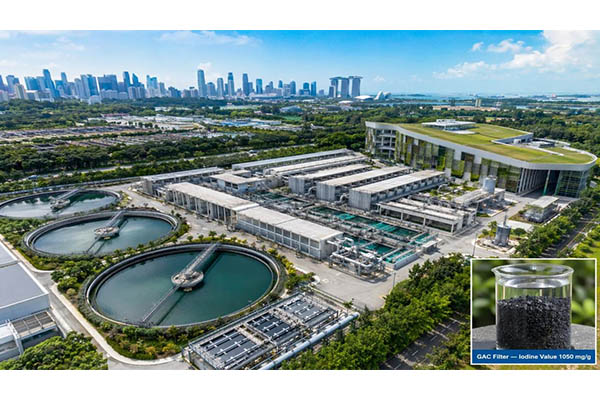
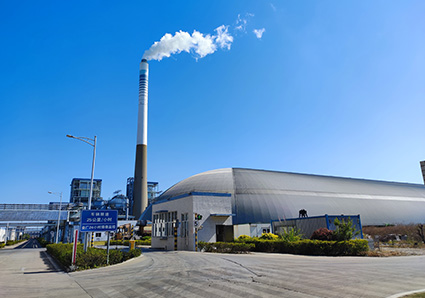
Figure 2: Advanced water treatment plant in Singapore, featuring large-scale GAC contactor arrays. Singapore's commitment to water security has driven world-class adoption of activated carbon in its treatment infrastructure.
Singapore's drinking water supply draws on a combination of local catchments (comprising two-thirds of the island's land area), imported water, NEWater (reclaimed water), and desalinated seawater. The local reservoir catchment system — while highly managed — is susceptible to algal blooms in the tropical climate (year-round temperatures of 25–34 °C), leading to recurring geosmin and 2-MIB events that generated significant public complaints about taste and odor, despite water meeting all microbial and chemical safety parameters.
A rapid urbanization-driven increase in catchment impervious surface area had also elevated runoff of trace organic contaminants, increasing the natural organic matter (NOM) load entering the treatment train. The existing conventional treatment sequence (coagulation → sedimentation → rapid sand filtration → chlorination) was producing water with THM concentrations of 60–75 μg/L — compliant with the WHO guideline of 100 μg/L but with diminishing regulatory headroom as source water quality varied seasonally.
Following a two-year pilot study and engineering review, the utility implemented a full-scale GAC contactor installation as a post-filtration polishing step before final disinfection. The design specification:
Carbon type: YICARB coconut shell GAC, 8×30 mesh, Iodine Number ≥ 1,050 mg/g, Hardness Number ≥ 96%
EBCT: 12 minutes (initial design), extended to 18 minutes after optimization
Contactor configuration: 8 parallel down-flow pressure vessels, 380 m³ total GAC inventory
Regeneration: Thermal, contracted off-site, targeting 14–18 month bed life
Pre-treatment: Existing coagulation–flocculation–sedimentation–filtration train retained
Post-treatment: Reduced chlorination dose, UV disinfection as primary disinfectant
Table 3: Singapore Case Study — Water Quality Performance Indicators
Performance Indicator | Pre-Upgrade (Baseline) | Post-GAC Upgrade |
THM Concentration (outlet) | 68 μg/L | < 12 μg/L (WHO limit: 100 μg/L) |
2-MIB (taste/odor) | 32 ng/L (detectable) | < 2 ng/L (threshold: 6 ng/L) |
Geosmin (taste/odor) | 28 ng/L (detectable) | < 2 ng/L (threshold: 4 ng/L) |
Residual Chlorine (outlet) | 0.5–0.8 mg/L | 0.1–0.2 mg/L (stable) |
Consumer taste complaints | ~420/month | < 35/month (−92%) |
DOC removal | 18% | 49% |
GAC bed life (per run) | N/A | 14–18 months before regen. |
Annual operating cost change | — | −22% (vs. PAC emergency dosing) |
Table 3: Pre- and post-GAC installation performance metrics — Singapore advanced treatment upgrade.
The reduction in taste-and-odor compounds below sensory detection thresholds — combined with a 33% reduction in THM output — transformed consumer perception of tap water quality. The shift from PAC emergency dosing (which had been the previous response to algal bloom events) to continuous GAC filtration reduced the overall treatment chemical cost by 22%, with the GAC capital investment projected to reach payback within 6.2 years.
"Our source water carries a fingerprint of the entire tropical island — agricultural inputs, urban runoff, algal metabolites. The GAC contactors don't just clean the water; they provide the regulatory buffer we need as our catchment quality becomes less predictable with each decade. — Senior Process Engineer, National Water Agency, Singapore"
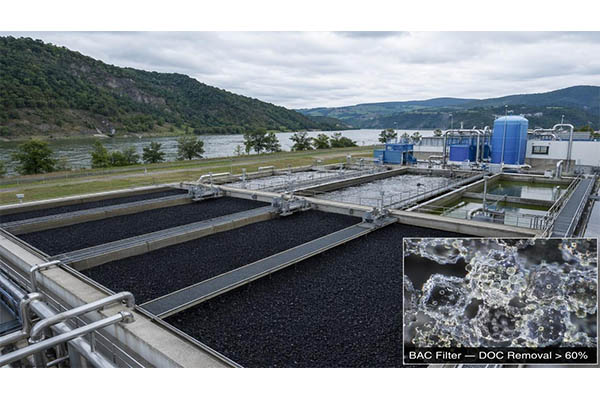
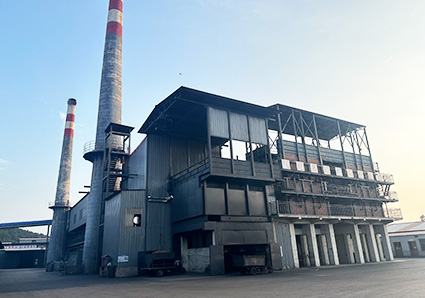
Figure 3: Biological activated carbon (BAC) filter basins at a Rhine River valley water treatment facility, Germany. The O₃/BAC process is the gold standard for advanced organic matter removal in European water utilities.
The Rhine River is one of Europe's most intensively managed water bodies, serving as a source water for drinking water production for approximately 20 million people across Germany, the Netherlands, France, and Switzerland. Despite the Rhine Action Programme having dramatically reduced industrial discharges since the 1980s, diffuse agricultural pollution (particularly nitrates and pesticides), pharmaceutical residues from upstream discharge, and the legacy of historical industrial contamination continue to challenge water utilities drawing from the Rhine and its tributaries.
A mid-sized Bavarian utility serving a population of approximately 280,000 was facing three converging compliance pressures:
EU Drinking Water Directive (2020/2184): New parametric values for a broader range of chlorination by-products and the first EU-level requirements for monitoring of PFAS and selected pharmaceuticals.
German TrinkwV (Trinkwasserverordnung): National standards for atrazine (0.1 μg/L) and other pesticides were being consistently challenged by agricultural catchment input.
Biological stability: DOC and assimilable organic carbon (AOC) levels in the distribution network were supporting biofilm regrowth, requiring excessive chloramine residuals and generating consumer complaints.
The utility's engineering team evaluated the O₃/BAC process — ozone pre-oxidation followed by biological activated carbon filtration — as the solution to all three pressures simultaneously.
The plant upgrade comprised:
Ozone system: 8 mg/L O₃ dose, 10-minute contact chamber, targeting transformation (not mineralization) of NOM into biodegradable fragments
BAC filter basins: 6 open-top basins, total plan area 1,200 m², GAC media depth 1.8 m, EBCT of 20 minutes
Carbon specification: YICARB coconut shell GAC, 12×40 mesh, Iodine Number 980–1,050 mg/g, Hardness Number ≥ 95%, NSF/ANSI 61 certified for drinking water contact
Biofilm establishment period: 6–8 weeks post-commissioning before steady-state biological performance
Backwash protocol: Air-water backwash every 72 hours, preserving biofilm while removing accumulated solids
Downstream: Slow sand filter, UV, and reduced chlorination (target: 0.8 mg/L free Cl₂ residual)
Table 4: Germany Case Study — Treatment Performance After O₃/BAC Integration
Performance Indicator | Conventional Filtration | After BAC Integration |
DOC removal (overall train) | 22% | 63% |
AOC (assimilable org. carbon) | 88 μg-C/L | < 10 μg-C/L (biostability target) |
Atrazine (pesticide) | 0.18 μg/L | < 0.02 μg/L (EU limit: 0.1 μg/L) |
Pharmaceutical compounds (sum) | 0.46 μg/L | < 0.05 μg/L |
Disinfection Cl₂ dose required | 2.4 mg/L | 0.8 mg/L (−67%) |
DBP formation potential (outlet) | Detected | Below detection limit |
Distribution system biofilm index | Moderate | Low (stable) |
Annual chemical (Cl₂) cost savings | — | EUR €280,000/year |
Table 4: Water quality improvements after O₃/BAC system integration — Rhine Valley utility, Germany.
The O₃/BAC system delivered outcomes exceeding engineering design targets on all key parameters. Most significantly, DOC removal improved from 22% (conventional filtration) to 63% — a threefold improvement — reducing both DBP formation potential and biological instability in the distribution network. The 67% reduction in chlorine dosing requirement translated directly into EUR €280,000/year in chemical cost savings, providing a compelling economic case alongside the compliance benefits.
Pharmaceutical compound monitoring (conducted quarterly per EU Directive requirements) showed consistent removal to below the laboratory quantification limit of 0.05 μg/L for all target analytes, including commonly detected antibiotics (ciprofloxacin, sulfamethoxazole) and anti-inflammatory drugs (diclofenac, ibuprofen).
"The biological activated carbon system is not simply a filtration upgrade — it is a fundamental rethinking of where the treatment burden should sit. By letting biology do what biology does best — breaking down organic carbon — we reduce the reliance on chemical disinfection and the problems it creates downstream. — Head of Water Quality, Rhine Valley Utility"
Not all activated carbons perform equally in drinking water treatment. The following parameters are non-negotiable for water utilities specifying activated carbon:
This standard certifies that the activated carbon does not leach harmful levels of contaminants into treated drinking water. Uncertified carbons — regardless of their adsorption performance — cannot legally be used in drinking water contact applications in North America, and NSF 61 is increasingly referenced in procurement specifications globally. As one of the leading activated carbon suppliers, YICARB's water-grade GAC carries full NSF/ANSI 61 certification with independent third-party testing.
Iodine Number (ASTM D4607) is the primary indicator of micropore volume and remains the most reliable single-number predictor of performance for small-molecule contaminants (taste/odor, THMs, pesticides). For PFAS removal, the iodine number should be supported by BET surface area measurement and Freundlich isotherm data for the specific target compounds. Utilities should match the carbon's Iodine Number to the required EBCT: higher Iodine Number carbon allows shorter EBCT for equivalent performance, reducing contactor footprint and capital cost.
In water treatment contactors, carbon fines — generated by attrition during backwash cycles — create two problems: (1) they pass through the filter and appear in the finished water as elevated turbidity or color, and (2) they represent a loss of adsorbent mass, shortening bed life. A Hardness Number of ≥ 95% (ASTM D3802) is the recommended minimum for GAC/BAC water treatment applications. Coconut shell carbon, with typical HN of 97–99%, consistently outperforms coal-based carbon in backwash stability.
The pH of the aqueous extract (ASTM D3838) should be 6.0–8.5 to avoid pH disruption to the treated water. Leachable heavy metal concentrations must meet NSF/ANSI 61 limits. Coal-based carbons with high ash content are more likely to show elevated leachable metals; coconut shell carbon's inherently low ash content (≤ 3%) minimizes this risk.
YICARB's water treatment activated carbon is produced from premium coconut shell endocarp, steam-activated in ISO 9001-certified rotary kilns, and independently tested to NSF/ANSI 61 drinking water contact standards before delivery. The company provides full technical documentation and lot-certified CoA for regulatory compliance in activated carbon for wastewater treatment and municipal drinking water applications.
Table 5: YICARB Water-Grade GAC — Technical Specification
Parameter | Specification | Standard / Remark |
Iodine Number | ≥ 1,000 mg/g | ASTM D4607 |
BET Surface Area | 1,000–1,200 m²/g | ISO 9277 |
Apparent Density | 440–520 kg/m³ | ASTM D2854 |
Hardness Number | ≥ 95% | ASTM D3802 |
Ash Content | ≤ 3% | ASTM D2866 |
Moisture Content | ≤ 8% | ASTM D2867 |
pH of Aqueous Extract | 6.0–8.5 | ASTM D3838 |
Heavy Metals (leachable) | Meets NSF/ANSI 61 | NSF/ANSI 61 — Drinking Water Safety |
Particle Size (standard) | 8×30 mesh / 12×40 mesh | ASTM D2862 |
Certifications | ISO 9001:2015; NSF/ANSI 61 | Lot-certified CoA per delivery |
Table 5: YICARB certified product specification for municipal drinking water treatment applications.
Available in 8×30 mesh and 12×40 mesh standard grades. Custom mesh sizes, reactivated carbon supply, and on-site technical support are available for established utility partners.
The case for activated carbon in municipal drinking water treatment has never been stronger — or more urgent. Regulatory frameworks on four continents are tightening limits for DBPs, pesticides, pharmaceuticals, and PFAS. Climate change is intensifying algal bloom events and increasing catchment NOM loads. Urbanization is placing growing pressure on finite source water resources. In this environment, activated carbon is not a legacy technology waiting to be replaced; it is the most versatile and proven advanced treatment tool available to water utilities today.
The Singapore and German case studies presented here represent two different treatment challenges — tropical taste-and-odor management versus European micropollutant and biological stability compliance — yet both demonstrate the same core principle: when high-quality activated carbon is correctly specified, properly designed into the treatment train, and operated with attention to EBCT and regeneration timing, it delivers measurable, durable improvements in finished water quality that conventional treatment cannot match.
For water utilities evaluating activated carbon for new installations, capacity upgrades, or emergency compliance responses, three principles apply: specify coconut shell GAC with a minimum Iodine Number of 1,000 mg/g and NSF/ANSI 61 certification; design for an EBCT of at least 10–15 minutes for general polishing or 20–30 minutes for PFAS/pharmaceutical targets; and consider the O₃/BAC configuration for sources with high NOM loads and biological stability requirements.