English
 français
 Deutsch
 Español
 português
 العربية
YICARB Technical Brief
From pore structure and surface chemistry to real-world contaminant removal in water and industrial treatment systems
Date | August 20, 2026 |
Author | YICARB Technical Expert (15+ years experience in activated carbon industry) |
How does activated carbon work? In practical treatment systems, activated carbon removes many dissolved or gaseous contaminants by adsorption: molecules migrate from the surrounding fluid into a highly developed pore network and are retained on internal carbon surfaces. The basic mechanism is simple, but real performance is controlled by contaminant chemistry, pore-size distribution, surface properties, contact time, competing substances, temperature, pH, and the way the carbon is used. This technical brief explains activated carbon adsorption step by step, shows why different contaminants behave differently, and provides a practical framework for understanding contaminant removal without reducing performance to a single specification such as iodine value or BET surface area.
The first distinction is between adsorption and absorption. Absorption describes a substance entering the bulk of another material, while adsorption occurs when molecules accumulate on a surface. Activated carbon works primarily through adsorption. Its value comes from a large internal surface distributed across an interconnected network of pores, giving dissolved or gaseous molecules many potential sites on which to be retained.
The process can be viewed as a sequence. A contaminant first moves from the bulk fluid toward the external surface of a carbon particle. It then passes through the surrounding boundary layer, enters larger transport pores, diffuses deeper into smaller pores, and finally interacts with internal carbon surfaces. When the interaction is favorable, the contaminant remains adsorbed until operating conditions change or the carbon approaches exhaustion.
This explains why activated carbon adsorption is not an instantaneous 'filtering' action. The carbon must provide both suitable adsorption sites and enough time for molecules to reach those sites. A carbon with high theoretical capacity can still underperform if diffusion is slow, contact time is insufficient, or the water matrix blocks access to the pore structure.
Activated carbon contains pores across a wide range of sizes. For practical discussion, they are commonly grouped into macropores, mesopores, and micropores. Macropores act mainly as transport routes into the particle. Mesopores help larger molecules move toward internal surfaces, while micropores provide a large share of the adsorption volume for smaller molecules.
This pore hierarchy is important because contaminants are not all the same size or shape. A carbon dominated by very small pores may be highly effective for certain small molecules, yet less suitable for larger organic compounds that cannot readily access those sites. Conversely, a material with broader transport and mesopore development may provide better access for larger contaminants even when a single quality-control number appears less impressive.
For this reason, pore-size distribution should be considered together with the target contaminant. The objective is not to maximize every pore category, but to create an accessible internal structure that matches the molecules that need to be removed.
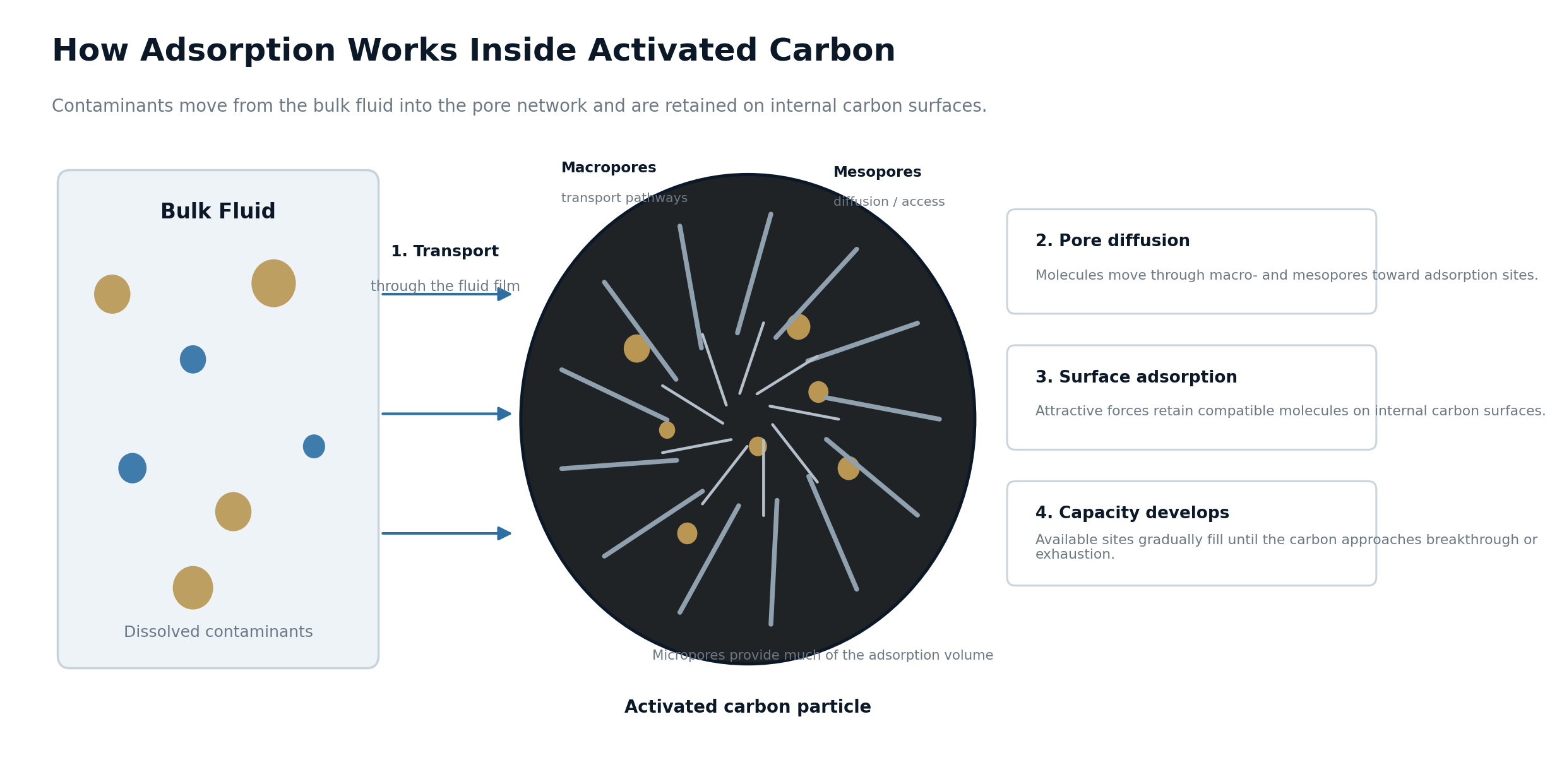
Figure 1: Activated carbon adsorption mechanism and pore structure.
Adsorption is driven by interactions between the contaminant and the carbon surface. For many organic compounds, non-covalent attractive forces and hydrophobic interactions play a major role. Surface chemistry also matters: oxygen-containing functional groups and mineral components can influence how the carbon interacts with polar molecules, ions, and water itself.
The strength of adsorption therefore depends on both the carbon and the contaminant. Molecular size, polarity, solubility, concentration, charge, and functional groups can all affect affinity. In water treatment, pH may change the charge state of a contaminant or the carbon surface, altering adsorption behavior. Temperature can influence equilibrium and mass-transfer rates. In gas treatment, humidity and the presence of competing vapors can change the number of sites available for the target compound.
This is why the same activated carbon can behave differently in different process streams. Adsorption capacity measured with a laboratory test compound is useful for quality control, but it is not a universal prediction of performance against every real contaminant.
Granular activated carbon is commonly used in fixed beds, pressure vessels, gravity filters, and polishing columns. The treatment stream passes through a bed of carbon, giving contaminants time to transfer from the fluid into the particles. As adsorption sites gradually fill, a mass-transfer zone moves through the bed. When the target contaminant begins to appear at an unacceptable concentration in the outlet, the bed is approaching breakthrough and the carbon may need to be replaced or regenerated.
Powdered activated carbon is normally added directly to a liquid process and later separated with sludge or another solid-liquid separation step. Its small particle size provides short diffusion paths and flexible dosing, which can be useful for variable contaminant loads or temporary process support. However, PAC performance also depends on mixing, dose, contact time, and effective downstream separation.
In gas-phase systems, activated carbon can adsorb volatile organic compounds, odor-causing molecules, and selected trace contaminants. The same core mechanism applies, but gas velocity, humidity, temperature, contaminant concentration, and bed depth become important design variables. Specialized impregnation may also be used when physical adsorption alone is insufficient for a specific gas-phase contaminant.
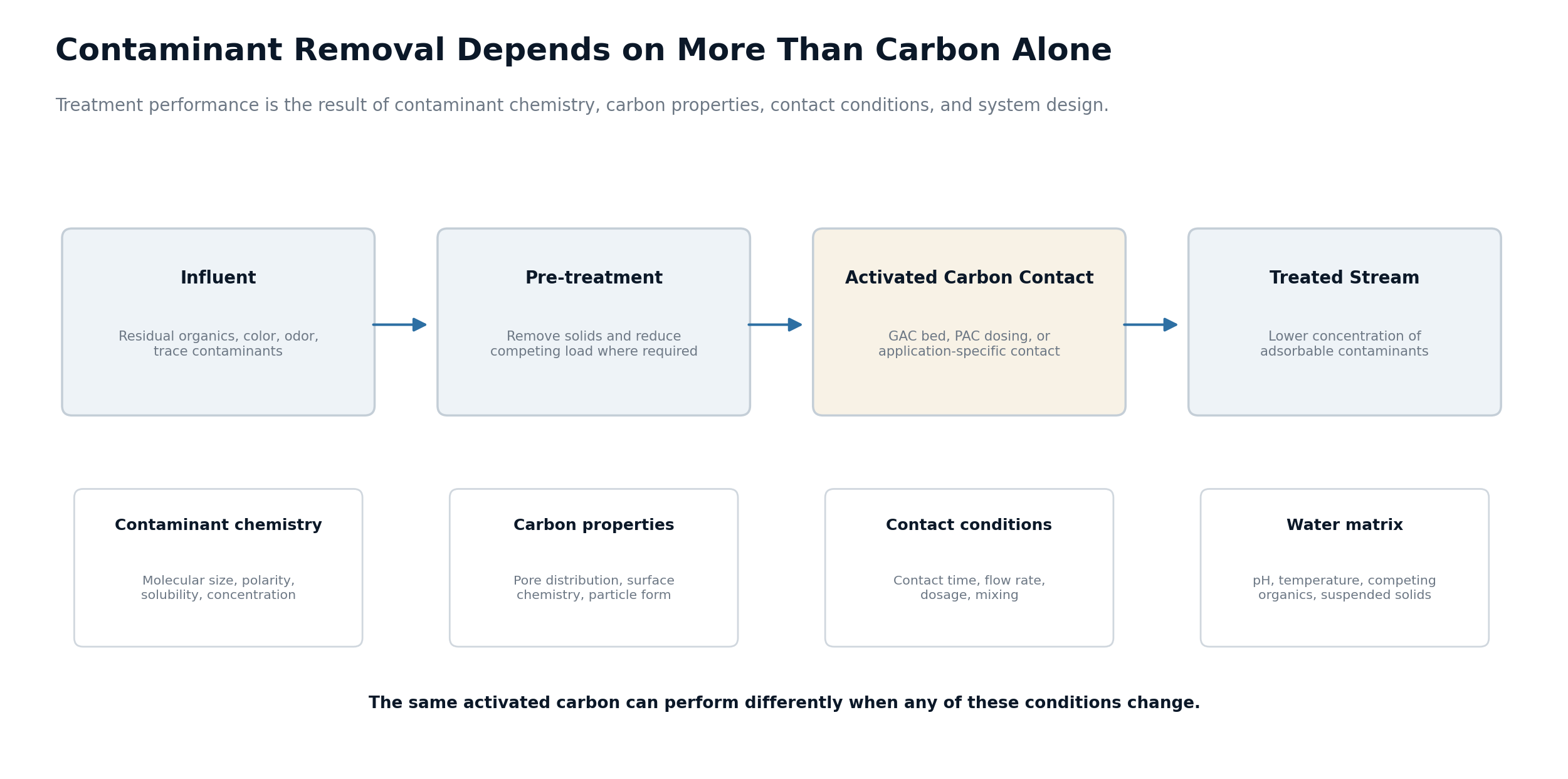
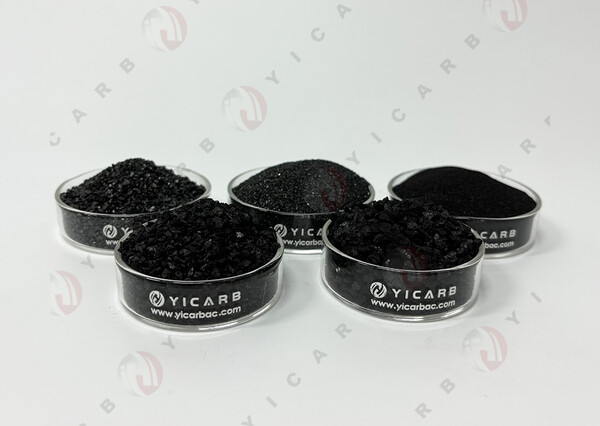
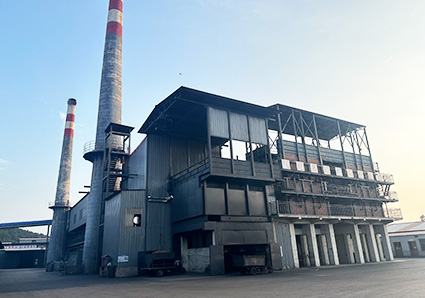
Figure 2: Contaminant removal using activated carbon treatment.
Understanding how activated carbon works also means understanding why performance changes. Several variables determine whether a contaminant reaches an adsorption site quickly enough and whether the site has sufficient affinity to retain it.
· Contaminant properties. Molecular size, polarity, solubility, concentration, and chemical form affect adsorption affinity and pore accessibility.
· Pore-size distribution. Transport pores and adsorption pores must be accessible to the target molecules; a mismatch can limit usable capacity.
· Contact time and flow. Short contact time or excessive hydraulic loading can cause contaminants to leave the system before equilibrium or sufficient mass transfer is achieved.
· Competing substances. Natural organic matter, oils, surfactants, and other dissolved compounds can occupy adsorption sites or block the external surface.
· pH and temperature. Both can alter contaminant speciation, surface interactions, and adsorption equilibrium.
· Particle size. Smaller particles generally shorten diffusion paths but can increase pressure drop, handling difficulty, or separation requirements.
· Pre-treatment quality. Suspended solids and high competing organic loads can foul carbon and reduce the fraction of pore structure available for the target contaminant.
Activated carbon is often compared using iodine value, BET surface area, CTC activity, ash, moisture, particle size, or hardness. These measurements can be valuable, but each describes only part of the product. Iodine value is commonly used as an indicator of adsorption associated with relatively small molecules and developed microporosity. BET surface area estimates accessible surface under a defined laboratory method. CTC activity is useful in certain gas-phase and pore-development evaluations. None of these values alone determines how a carbon will perform against a complex industrial contaminant mixture.
For liquid applications, a supplier should also consider the contaminant profile, carbon form, particle size distribution, hydraulic requirements, mechanical strength where relevant, and expected replacement or regeneration strategy. For difficult applications, bench-scale adsorption tests or pilot trials can provide more meaningful information than comparing specification sheets alone.
Application Example - not a customer case study: Consider an industrial facility where physical and biological treatment remove most suspended solids and biodegradable load, but the final effluent still contains residual dissolved organics, color, and odor-causing compounds. The treatment objective is stable polishing before discharge or reuse.
A suitable evaluation would begin with the remaining contaminant profile rather than with a target iodine number. If the residual organics are primarily dissolved and the flow is continuous, a GAC fixed bed may provide controlled contact and straightforward monitoring of breakthrough. If the load is highly variable or temporary, PAC dosing may offer operational flexibility. In either case, competing organics, contact time, particle size, pre-treatment quality, and carbon replacement strategy should be evaluated together.
The example illustrates the practical meaning of contaminant removal by activated carbon: the mechanism is adsorption, but successful application depends on matching the carbon and the treatment configuration to the actual contaminant matrix.
A useful evaluation process combines specification data with application evidence. Industrial buyers can request a batch-specific Certificate of Analysis (COA) and review relevant parameters such as iodine value, particle size distribution, ash, moisture, and mechanical strength for granular products. The significance of each parameter should be tied to the intended process rather than treated as an isolated purchasing target.
For new or difficult contaminant streams, a staged approach is more reliable: characterize the influent, define the removal target, shortlist carbon types based on pore structure and form, conduct laboratory adsorption testing where practical, and then confirm hydraulic or operational behavior through pilot or field evaluation. This approach turns carbon selection from specification shopping into process engineering.
YICARB approaches activated carbon selection by connecting material properties with the actual treatment objective. For water and industrial applications, that means looking beyond a single adsorption number and considering pore accessibility, carbon form, particle size, mechanical behavior, operating conditions, and the chemistry of the contaminants to be removed.
Consistent manufacturing and quality control are especially important because adsorption systems depend on predictable carbon behavior from batch to batch. A technically appropriate carbon should not only show suitable laboratory indicators; it should also fit the way the customer intends to dose, contain, handle, regenerate, or replace the material.
Activated carbon is effective because its internal pore network provides a large and chemically active surface on which compatible contaminants can be adsorbed. Yet contaminant removal is never controlled by surface area alone. Pore-size distribution, molecular properties, contact time, competing substances, pH, temperature, particle form, and system design all influence the usable adsorption performance of a carbon in real operation.
The practical answer to the question 'How does activated carbon work?' is therefore more than 'through adsorption.' It works when contaminants can reach appropriate internal surfaces and remain there under the actual process conditions. Understanding that relationship between adsorption mechanism, contaminant chemistry, and treatment design is the foundation for selecting activated carbon that performs reliably in industrial applications.
This is the first one.